AtaGenix Laboratories

Home - Support Center - Publication Insights

Publication Insights

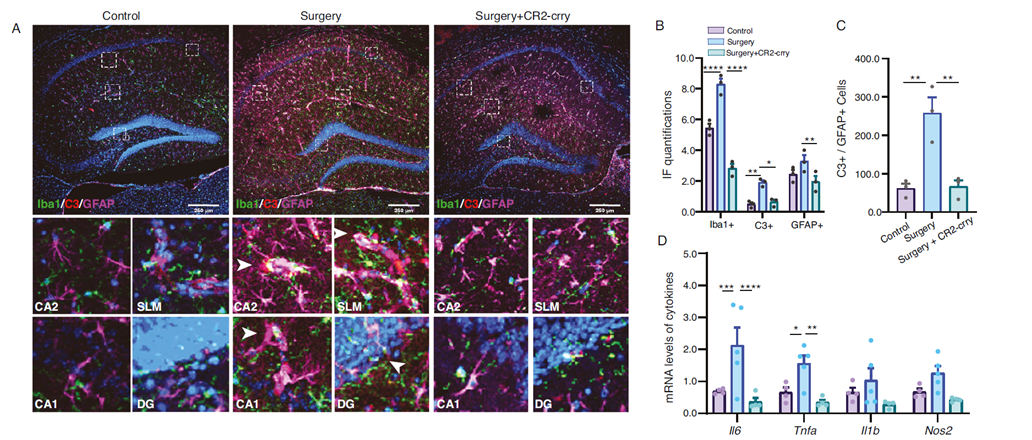
  • Unveiling the Role of C3/C3aR Pathway and PF4 in Perioperative Neurocognitive Disorders: Insights from AtaGenix’s CR2-crry Intervention
    Perioperative Neurocognitive Disorders (PND) affect up to 40% of elderly surgical patients, leading to prolonged hospitalization and increased care costs without FDA-approved treatments. This study explores the C3/C3aR complement pathway’s role in driving neuroinflammation and the potential of platelet factor 4 (PF4) as a protective factor. Using AtaGenix’s custom-synthesized CR2-crry inhibitor, researchers demonstrated in clinical and animal models that targeting C3 reduces inflammation and cognitive decline, while PF4 supplementation enhances cognitive recovery and neuronal repair. These findings highlight novel therapeutic targets for PND, with CR2-crry showing promising clinical translation potential.
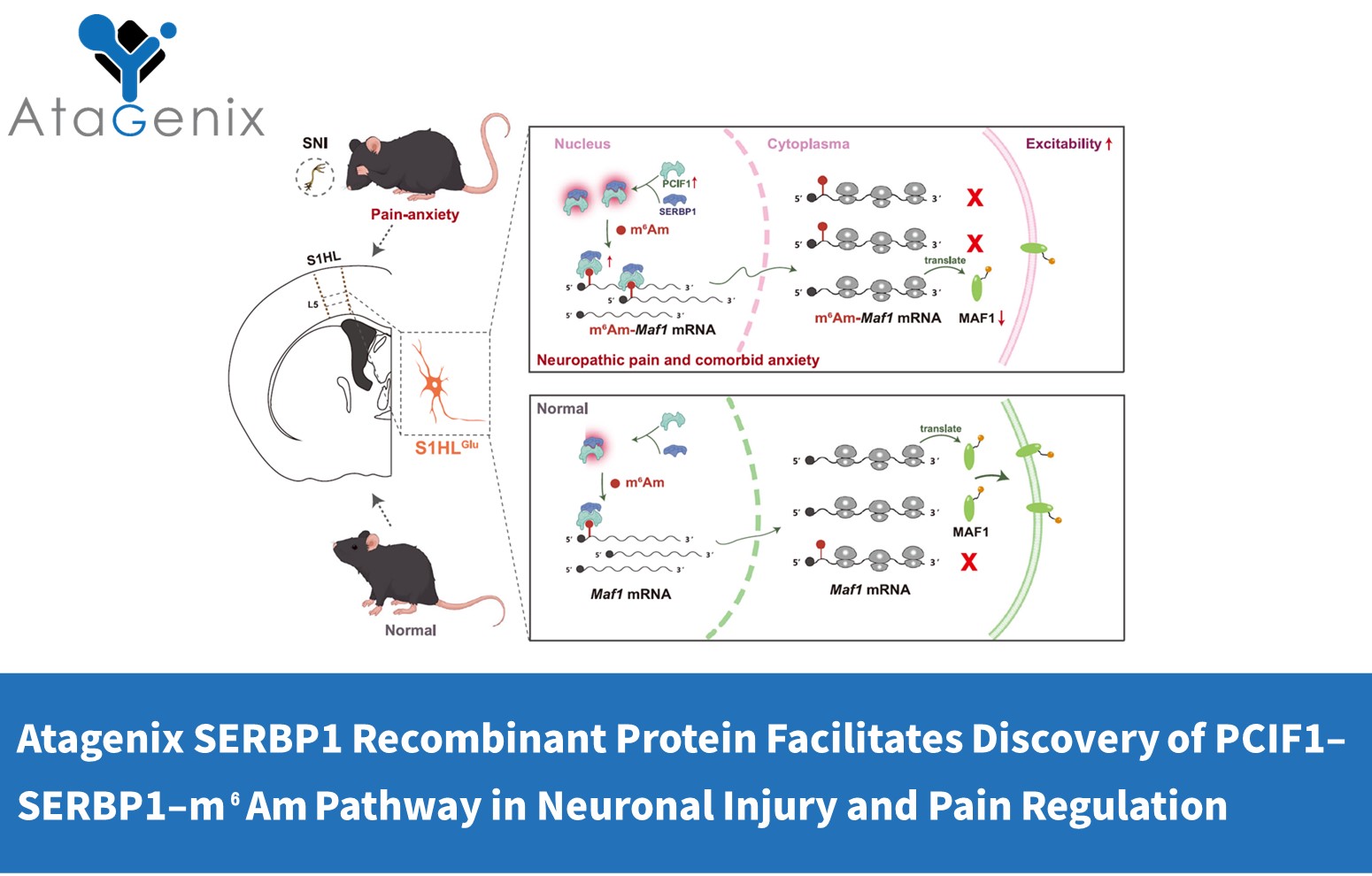
  • Atagenix SERBP1 Recombinant Protein Facilitates Discovery of PCIF1–SERBP1–m⁶Am Pathway in Neuronal Injury and Pain Regulation
    Using the custom insect-cell–expressed SERBP1 recombinant protein provided by Atagenix, researchers uncovered the pivotal role of the PCIF1–SERBP1 complex in modulating neuronal function under nerve injury conditions. The study revealed that the complex promotes m⁶Am modification of Maf1 mRNA, resulting in reduced MAF1 protein levels and heightened neuronal excitability, thereby
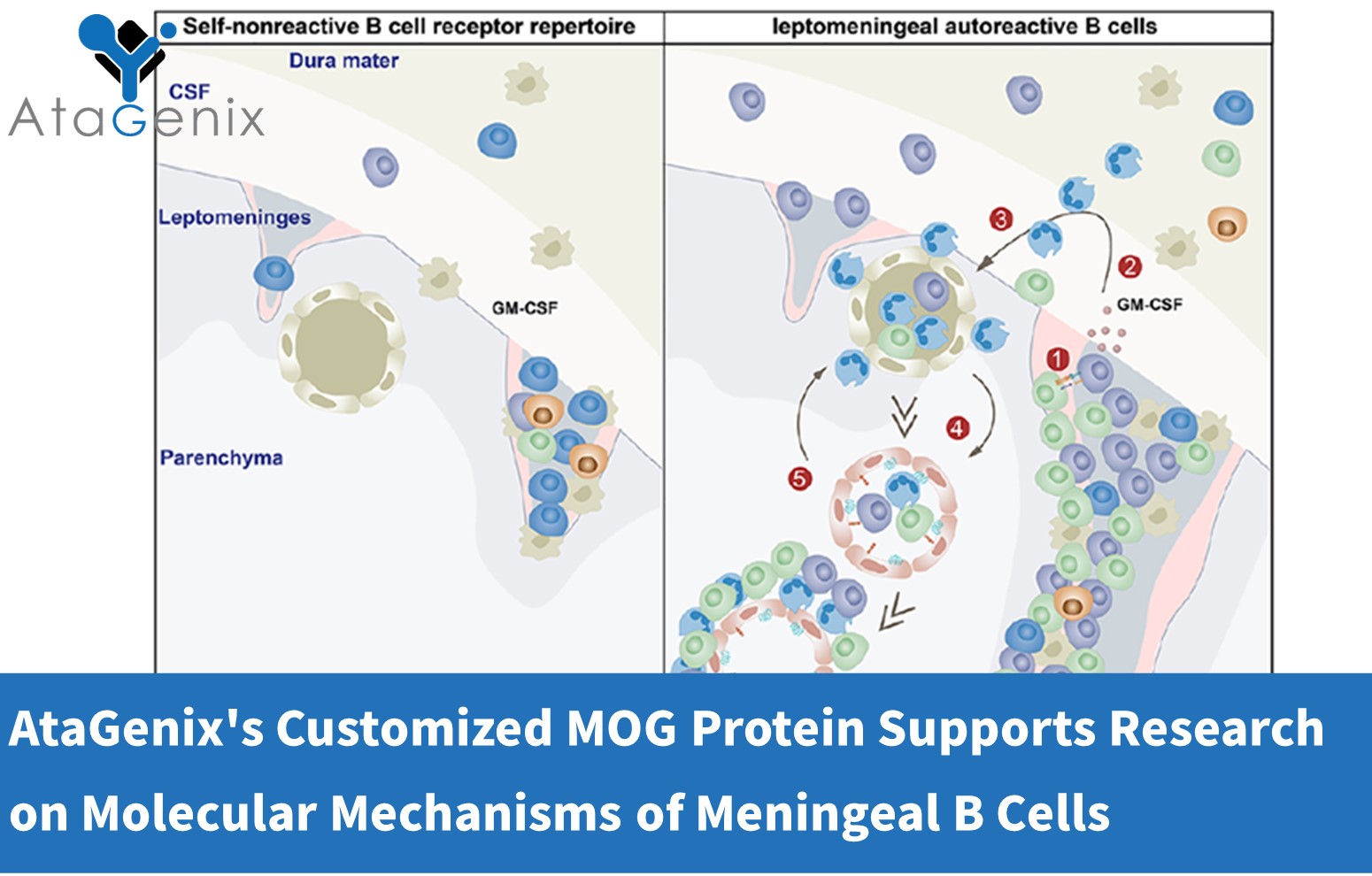
  • AtaGenix's Customized MOG Protein Supports Research on Molecular Mechanisms of Meningeal B Cells
    A research team from Westlake Laboratory of Life Sciences and Biomedicine published a study in Immunity, elucidating the molecular mechanisms by which meningeal B cells drive neuroinflammatory relapse in multiple sclerosis (MS) through antigen presentation and cognate interactions with T cells. Using the experimental autoimmune encephalomyelitis (EAE) model, combined with single-cell RNA sequencing and immunofluorescence, the study revealed that meningeal autoreactive B cells, activated by MOG antigens, promote T cell-mediated inflammation via MHC-II-mediated antigen presentation, forming a “T-B cell-neutrophil-endothelial cell” inflammatory loop. Targeted depletion of local brain B cells effectively alleviated EAE relapse, offering new directions for MS precision therapy. AtaGenix provided high-purity MOG protein, supporting key experimental validations.

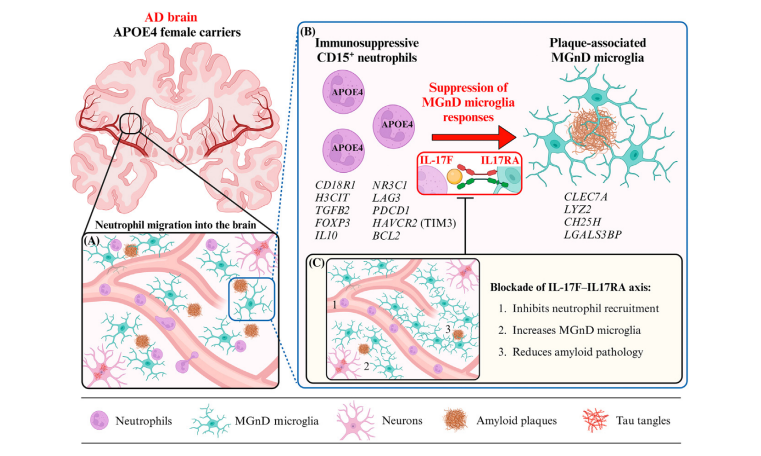
  • The Impact of ApoE4 on Neutrophil-Microglia Interactions in Alzheimer's Disease
    Alzheimer's disease (AD) is the most common form of dementia, causing significant social and economic impact. Its characteristic neuropathological features include β-amyloid (Aβ) deposition, tau hyperphosphorylation, and the loss of synapses and neurons. In recent years, studies have shown that chronic inflammation mediated by local and peripheral immune cells also plays a critical role in the pathogenesis of AD.
Messages