AtaGenix Laboratories

AtaGenix Laboratories
AtaGenix develops neutralizing and blocking antibodies with verified functional activity — not just binding, but confirmed inhibition of target-receptor interaction, viral entry, or toxin activity. We combine our antibody discovery platforms with functional screening assays to ensure every delivered antibody meets your neutralization or blocking requirement.
3
Discovery Platforms
Functional
Screening Included
IC50
Potency Characterization
Multi-Species
Mouse, Rabbit, Human
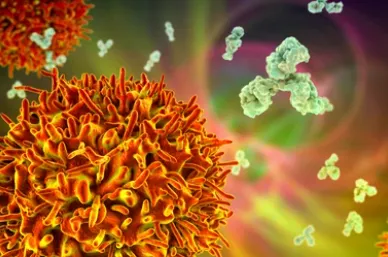
Neutralizing antibodies bind key antigenic sites on viruses or bacterial toxins, blocking entry into target cells or preventing toxin activity. Blocking antibodies bind directly to target proteins and disrupt receptor-ligand interactions or downstream signaling. Both require functional assays beyond standard binding ELISA to confirm activity — competitive ELISA, cell-based neutralization, or receptor-blocking assays.
| Feature | Neutralizing Antibody | Blocking Antibody |
| Target | Viral surface proteins, bacterial exotoxins | Receptor-ligand pairs, signaling proteins |
| Mechanism | Prevents pathogen entry into host cell or toxin binding to receptor | Disrupts protein-protein interaction or downstream signal |
| Functional Assay | Virus neutralization (plaque reduction, pseudovirus), toxin neutralization | Competitive ELISA, receptor-blocking assay, cell-based reporter |
| Key Applications | Antiviral therapeutics, vaccine evaluation, infectious disease research | Immune checkpoint blockade, receptor antagonist research, signal pathway studies |
| Example Targets | SARS-CoV-2 RBD, Influenza HA, NiV G protein, bacterial toxins | PD-1/PD-L1, CTLA-4/B7, VEGF/VEGFR, TNF/TNFR, IL-6/IL-6R |
| Platform | Best For Neutralizing/Blocking | Timeline | Species |
| Phage Display | Fully human neutralizing Abs without immunization; competitive panning against receptor to enrich blockers; VHH nanobodies for accessing cryptic epitopes | 2–4 weeks (naïve) to 10–14 weeks (immune) | Human, camelid, rabbit, mouse |
| Rabbit Single B Cell | Highest affinity neutralizing Abs (10–100x vs mouse); superior epitope diversity for blocking poorly accessible sites; ideal when high potency is critical | 16–20 weeks | Rabbit |
| Rapid Hybridoma | Traditional mouse mAb with hybridoma cell line; well-suited for blocking Abs where mouse-origin is acceptable and established secondary systems are needed | 4–6 months | Mouse |
Functional Screening, Not Just Binding
Standard antibody projects deliver binders validated by ELISA. Neutralizing/blocking projects add functional assays — competitive ELISA, receptor-blocking assay, or cell-based neutralization — to confirm that the antibody actually inhibits its target's biological activity, not just binds it.
Competitive Panning for Blockers
For blocking antibodies against receptor-ligand pairs, we can use competitive panning (phage display) in the presence of the natural ligand, enriching for clones that directly compete at the receptor-binding interface. This is more efficient than screening thousands of binders and testing each for blocking activity.
IC50 Potency Characterization
Every neutralizing/blocking antibody project includes potency characterization — IC50 determination by dose-response competitive ELISA or cell-based assay. This gives you quantitative data to rank candidates and select leads for downstream development.
AtaGenix develops neutralizing and blocking antibodies using three discovery platforms: phage display (naïve or immune library, fastest route to fully human Abs), rabbit single B cell (highest affinity, 10–100x vs mouse), and mouse hybridoma (traditional mAb with cell line). All neutralizing/blocking projects include functional screening beyond standard binding ELISA — competitive ELISA, receptor-blocking assay, or cell-based neutralization — with IC50 potency characterization. Target antigens can be client-provided, expressed via our protein platform, or sourced from the abinScience catalog (including emerging pathogen reagents for SARS-CoV-2, MPXV, NiV, hMPV, and influenza).
A 5-stage pipeline. Steps 01–03 use your chosen discovery platform; Steps 04–05 add functional screening and potency characterization specific to neutralizing/blocking projects.
01
Target Antigen
Client-provided or AtaGenix-expressed
Viral surface protein / toxin / receptor
Antigen design & QC
02
Discovery Platform
Phage display (naïve / immune)
Rabbit single B cell (Xten™ Mab)
Mouse hybridoma
03
Binding Screening
ELISA titer confirmation
Specificity profiling
Initial candidate selection
04
Functional Screening
Competitive ELISA
Receptor-blocking assay
or cell-based neutralization
05
Potency & Delivery
IC50 dose-response
Lead candidate ranking
Purified Ab + sequence + report
Functional Assay Options
| Assay | How It Works | Best For |
| Competitive ELISA | Antibody competes with labeled ligand/receptor for binding; signal reduction = blocking | Receptor-ligand blocking (PD-1/PD-L1, VEGF/VEGFR, TNF/TNFR) |
| Receptor-Blocking Assay | Antibody pre-incubated with antigen, then tested for ability to prevent receptor binding on cells (FC or plate-based) | Cell-surface receptor blocking, immune checkpoint targets |
| Cell-Based Neutralization | Antibody incubated with virus/toxin, then added to susceptible cells; inhibition of infection/toxicity measured | Virus neutralization (pseudovirus or live virus), toxin neutralization |
| SPR/Biacore Competition | Real-time label-free measurement of competition between antibody and ligand for binding | Epitope binning, competition ranking, kinetic characterization |
Service Scope
| ✓ Antigen preparation (in-house or client-provided) | ✓ Phage display / Single B cell / Hybridoma |
| ✓ Competitive panning for blocking Ab enrichment | ✓ Standard binding ELISA + specificity profiling |
| ✓ Functional screening (competitive / blocking / neutralization) | ✓ IC50 potency characterization |
| ✓ Recombinant expression & purification | ✓ Optional: SPR/Biacore affinity & epitope binning |
| ✓ Deliverables: purified Ab + sequence + functional data | ✓ Optional: affinity maturation for potency improvement |
Working on emerging pathogens? abinScience offers ready-to-use viral antigens for SARS-CoV-2, MPXV, NiV, hMPV, and influenza that can serve as targets for neutralizing Ab screening. For immune checkpoint blocking antibodies, browse our PD-1, PD-L1, CTLA-4, and B7-H3 recombinant proteins and Research Biosimilar checkpoint inhibitors.
What is the difference between a neutralizing antibody and a blocking antibody?
Neutralizing antibodies inhibit the biological activity of pathogens (viruses, toxins) by preventing them from entering or affecting host cells. Blocking antibodies disrupt protein-protein interactions (e.g., receptor-ligand binding) to inhibit downstream signaling. In practice, the terms overlap: a blocking antibody against a viral receptor-binding domain is also neutralizing. The key distinction is functional — both require assays beyond binding ELISA to confirm activity.
Which discovery platform is best for neutralizing antibodies?
Phage display with naïve human libraries (LiAb-SFMAX™, LiAb-SFCOVID-19™) is the fastest route to fully human neutralizing antibodies without immunization — critical for rapid pandemic response. Rabbit single B cell (Xten™ Mab) produces the highest-affinity neutralizing antibodies, with 10–100x higher potency than mouse equivalents. Mouse hybridoma is suitable when mouse-origin antibodies are acceptable and hybridoma cell lines are needed for long-term supply.
How do you ensure the antibody actually blocks/neutralizes, not just binds?
Every neutralizing/blocking project includes functional screening in addition to standard binding ELISA. For blocking antibodies, we use competitive ELISA or receptor-blocking assays to confirm that the antibody prevents target-receptor interaction. For neutralizing antibodies, cell-based assays (pseudovirus neutralization, cytopathic effect inhibition) confirm that the antibody prevents infection or toxin activity. IC50 values are determined by dose-response curves to quantify potency.
Can you improve potency if initial hits have weak neutralization?
Yes. If initial screening identifies binders with confirmed but weak neutralizing/blocking activity, AtaGenix offers in vitro affinity maturation as an add-on service using error-prone PCR, chain shuffling, or CDR-targeted mutagenesis. Matured variants are re-screened in the same functional assay to confirm improved IC50. This is particularly common when starting from naïve library hits, which often have moderate initial affinity that can be improved 10–100-fold through maturation.
Neutralization/blocking potency is target- and assay-dependent. Cell-based neutralization assays require appropriate cell lines and may need BSL-2+ facilities for live virus work (pseudovirus assays do not). IC50 data is included in the technical report. Quote-based pricing.

Contact Us

+86-27-65523339

info@atagenix.com

Building C, R & D Building, No. 666, Shendun 4th Road, Donghu New Technology Development Zone, Wuhan