AtaGenix Laboratories

AtaGenix Laboratories
Release time: 2026-09-15 View volume: 270
The antibody discovery field has long relied on a narrow set of host species. Mouse remains the default for hybridoma-based monoclonal antibody generation, and rabbit has become the go-to for high-affinity recombinant antibodies via single B-cell cloning and phage display. Together, these two species account for the vast majority of commercially available primary antibodies and virtually all antibody discovery CRO workflows.
This concentration creates practical limitations that become apparent in specific experimental contexts. In multiplex immunostaining, available species channels are quickly exhausted when all primary antibodies derive from mouse and rabbit. In sandwich ELISA development, capture-detection pairs drawn from the same host species compete for overlapping epitope clusters, narrowing the combinatorial space for matched-pair optimization. And for targets that are highly conserved across mammals — or that are inherently toxic or conformationally unstable — conventional immunization in mouse or rabbit may simply fail to generate a productive immune response.
These constraints have driven growing interest in alternative host species, particularly those that are phylogenetically distant from rodents and lagomorphs. Among the most practical candidates are goats and sheep — two closely related ruminant species within the subfamily Caprinae that have been used for polyclonal antibody production for decades, but are now attracting renewed attention as sources for recombinant monoclonal antibody discovery.
Understanding what makes caprine antibodies structurally distinct from their murine and leporine counterparts requires a look at the underlying immunoglobulin gene organization.
One of the most striking features of caprine immunoglobulins is the overwhelming predominance of lambda (λ) light chains over kappa (κ) chains. In humans, the κ:λ ratio is approximately 60:40; in mice, κ dominates at roughly 95:5. In sheep and goats, the ratio is reversed — lambda chains constitute the vast majority of the expressed light chain repertoire (Foley et al., 1992; Sun et al., 2012). This is a shared characteristic among ungulates (cattle, horses, sheep, goats) and reflects differences in the genomic organization and number of functional V-gene segments in the κ and λ loci.
A recent NGS-based analysis of the sheep immunoglobulin repertoire confirmed this pattern, reporting far greater diversity in lambda chain CDR3 sequences compared to kappa, with over 218,000 unique IGL CDR3 reads versus approximately 48,000 unique IGK CDR3 reads across four healthy animals (Qin et al., 2023). This lambda predominance has direct implications for antibody library design: caprine scFv libraries must prioritize lambda V-gene representation to accurately reflect the natural repertoire.
The sheep heavy chain locus utilizes a relatively restricted set of IGHV germline genes compared to humans, but compensates through extensive somatic hypermutation and junctional diversity — a strategy shared with cattle (Sun et al., 2012). NGS studies have identified biased usage of certain VH and VJ gene segments, with IGHJ4 accounting for over 86% of heavy chain J-gene rearrangements in sheep (Qin et al., 2023). Despite this apparent restriction, the expressed repertoire achieves high diversity through combinatorial VDJ recombination and post-recombination diversification mechanisms.
On the light chain side, the lambda locus shows usage of multiple Vλ families (IGLV1 through IGLV8), with IGLV1 typically representing the largest proportion. This multi-family coverage is important for naïve library construction, as it ensures that the library samples a broad structural space for antigen binding.
The third complementarity-determining region (CDR3) of the heavy chain is the primary determinant of antigen-binding specificity in most antibodies. In sheep, VH-CDR3 lengths follow a roughly normal distribution centered around 12–17 amino acids, which is similar to the range observed in human antibodies but shorter than the exceptionally long CDR3 regions found in cattle (which can exceed 60 amino acids). Light chain CDR3 lengths in sheep are more restricted, typically clustering at 9–11 amino acids, consistent with other mammalian species (Qin et al., 2023).
This CDR3 length profile suggests that caprine antibodies primarily engage antigens through conventional binding modes — using CDR loops of moderate length to contact surface-exposed epitopes — rather than the extended knob-domain penetration seen in bovine ultralong antibodies. For most practical antibody discovery applications, this is advantageous: conventional CDR3 lengths are more compatible with standard scFv and IgG reformatting workflows.
The practical argument for caprine antibodies rests on a concept often described as epitope complementarity — the idea that antibodies from phylogenetically divergent hosts may recognize different regions of the same target protein.
This is not simply about "binding to different epitopes" in a generic sense. The mechanism is rooted in immune tolerance. Each species maintains central tolerance against self-proteins, and the closer two species are in evolutionary terms, the more self-proteins they share. A target that is highly conserved between humans and mice may be tolerated (immunologically invisible) in both species, making it difficult to raise high-quality antibodies in either host. A caprine host, with its more distant evolutionary relationship to both humans and rodents, may lack tolerance to the same regions — enabling immune recognition of epitope surfaces that are silent in conventional hosts.
It is important to note that this is a probabilistic argument, not a guarantee. Not every conserved target will yield better antibodies from goat or sheep than from mouse or rabbit. But across a portfolio of targets, incorporating a phylogenetically diverse host expands the probability space of finding useful binders — particularly for difficult targets where conventional approaches have failed.
Historically, the primary route to caprine antibodies was polyclonal serum production: immunize a goat with the target antigen, collect serum after several boosts, and affinity-purify the target-specific IgG fraction. This approach is simple and yields large quantities of antibody, but comes with inherent limitations — batch-to-batch variability, undefined epitope specificity, no sequence information, and a finite supply tied to the immunized animal.
The application of phage display technology to caprine immunoglobulins was first demonstrated by Li et al. (2000), who constructed an scFv library from the spleens of sheep immunized with model antigens (human serum albumin and conalbumin). They successfully isolated 14 distinct scFv clones with typical ovine immunoglobulin characteristics, including Vλ families I, II, and VI — confirming that the sheep Ig repertoire could be captured and functionally displayed on phage. This foundational work established the technical feasibility of generating recombinant monoclonal sheep antibody fragments using phage display.
Subsequent work extended this approach to other applications, including the selection of ovine scFv clones against parasitic nematode surface antigens from field-immune sheep (Shaw et al., 2009), demonstrating that the technology could work with both immunized and naturally exposed animals.
The logical next step — constructing large naïve (non-immunized) caprine libraries for target-agnostic discovery — has only recently become practical, as library construction and NGS-based QC technologies have matured.
Multiplex Immunostaining
The most immediate application is expanding species channel availability for multi-color IHC and IF panels. Anti-goat IgG secondary antibodies are widely available from major suppliers (Jackson ImmunoResearch, Thermo Fisher, Abcam), making integration of a caprine primary antibody into existing mouse/rabbit panels straightforward. This addresses a genuine bottleneck in spatial biology and multiplex tissue profiling workflows, where four or more simultaneous markers are increasingly standard.
Sandwich ELISA and Diagnostic Development
In paired-antibody assays, the ideal capture and detection antibodies bind non-overlapping epitopes on the target. When both antibodies come from the same host species, epitope overlap is more likely. Introducing a caprine-derived antibody as one member of the pair — particularly from a naïve library, where epitope selection is unbiased by immunization protocol — expands the pairing options. This has practical relevance for diagnostic kit developers working on targets where mouse-mouse or mouse-rabbit pairs have proven difficult to optimize.
Conserved and Difficult Targets
For targets where conventional immunization fails — due to high conservation, toxicity, or poor immunogenicity — a naïve phage display library from a phylogenetically distant host offers an alternative discovery route that bypasses immunization entirely. The combination of caprine Ig repertoire diversity with naïve library panning is conceptually well-suited to these challenging targets, though success remains target-dependent.
AtaGenix (Wuhan, China) has recently constructed a large naïve scFv phage display library — designated Caprines-Native-scFv — derived from multiple breeds of both goat and sheep, with each species sub-library built independently to allow flexible panning strategies (combined or single-species).
| Parameter | Value |
| Total library capacity | 3.101 × 10¹⁰ cfu |
| Insertion accuracy | 98.0% |
| Sequencing accuracy | >85% |
| Germline coverage (NGS) | LC: IGKV1/2, IGLV1/2/3/8; HC: IGHV1S1 (62%), S2/S3/S4/S6/S9 |
| CDR3 distribution | VH-CDR3 peak 15 aa; VL-CDR3 peak 10 aa |
| Species sub-libraries | Goat-LH and Sheep-LH, independently built |
| Turnaround | 6–8 weeks from antigen receipt |
| Output formats | scFv, scFv-Fc, or full-length IgG |
The germline V-gene distribution is consistent with published ovine immunoglobulin data: lambda light chains dominate, with IGLV1 representing the largest single family (40%), and heavy chain usage is concentrated on IGHV1S1 (62%) — a pattern that mirrors the biased VH gene usage reported by Qin et al. (2023) in healthy sheep.
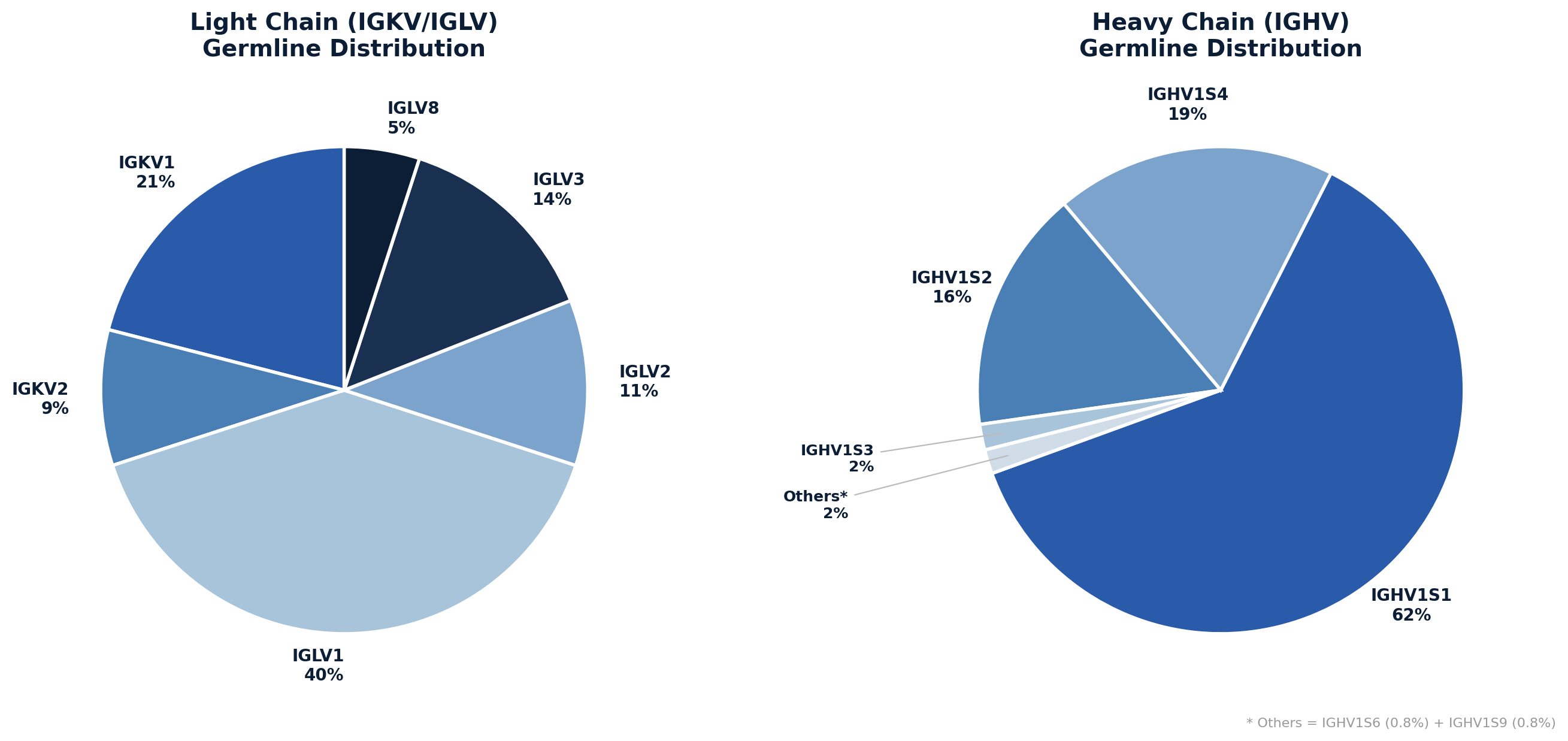
Figure 1. Germline gene distribution of the Caprines-Native-scFv library. Left: Light chain (IGKV/IGLV); Right: Heavy chain (IGHV).
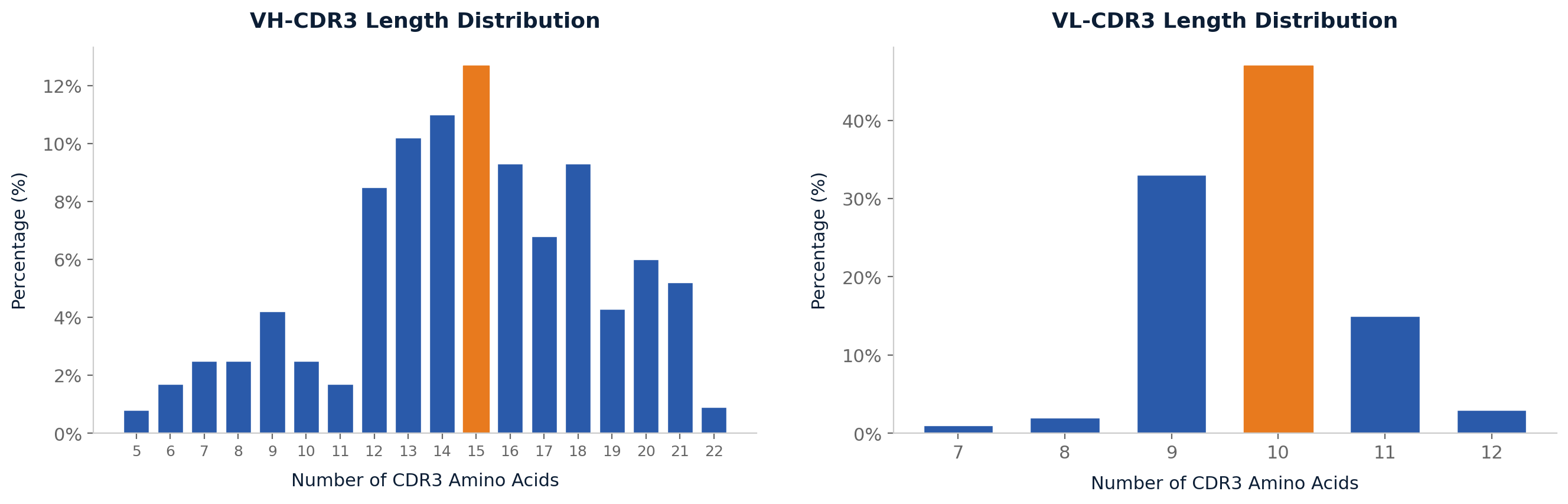
Figure 2. CDR3 length distribution. Left: VH-CDR3 (peak at 15 aa); Right: VL-CDR3 (peak at 10 aa). Orange bars indicate peak values.
Initial validation against three targets — GlmM (41.98 kDa), human B3GNT6 (37.37 kDa), and human CLEC7A/CD369 (16.71 kDa) — yielded ELISA-positive clones confirmed by Western Blot, with EC50 values ranging from 91.6 to 2,002 ng/mL. These values are consistent with typical naïve library output and fall within the range expected before any affinity maturation.
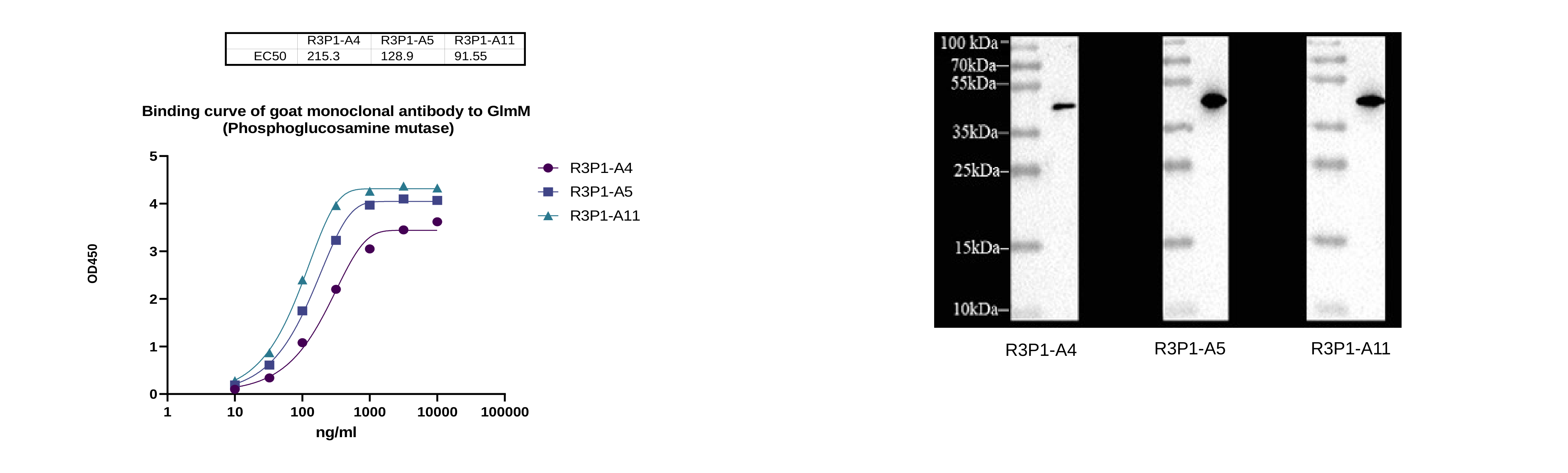
Figure 3. ELISA binding curve — GlmM. Three positive clones (R3P1-A4/A5/A11), EC50: 91.6–215.3 ng/mL.
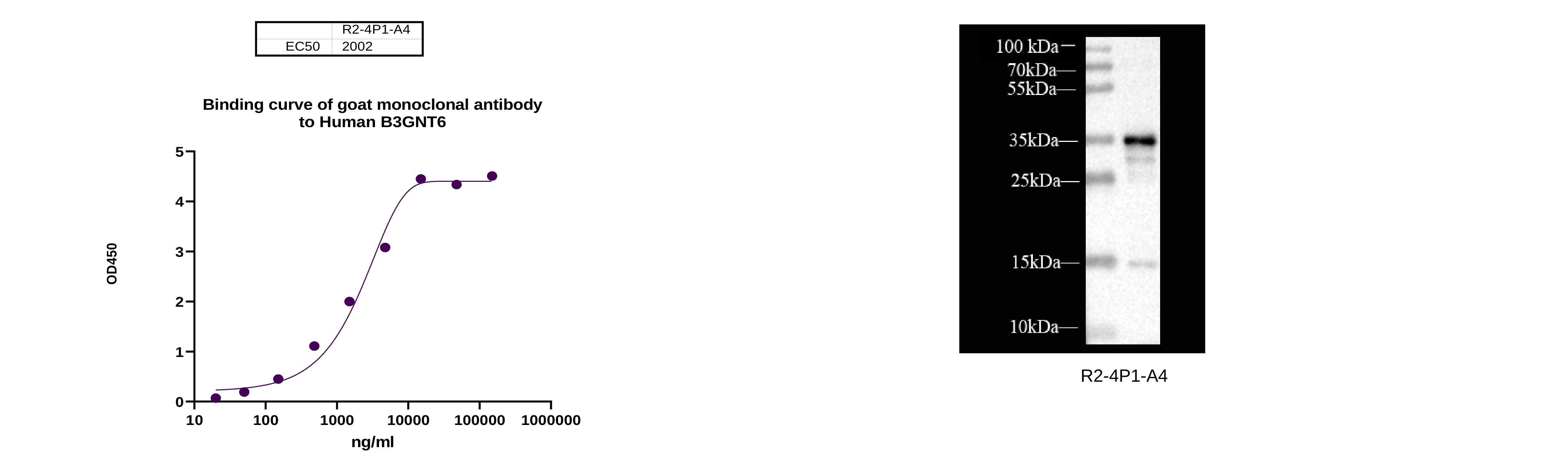
Figure 4. ELISA binding curve — Human B3GNT6. One positive clone (R2-4P1-A4), EC50: 2,002 ng/mL.
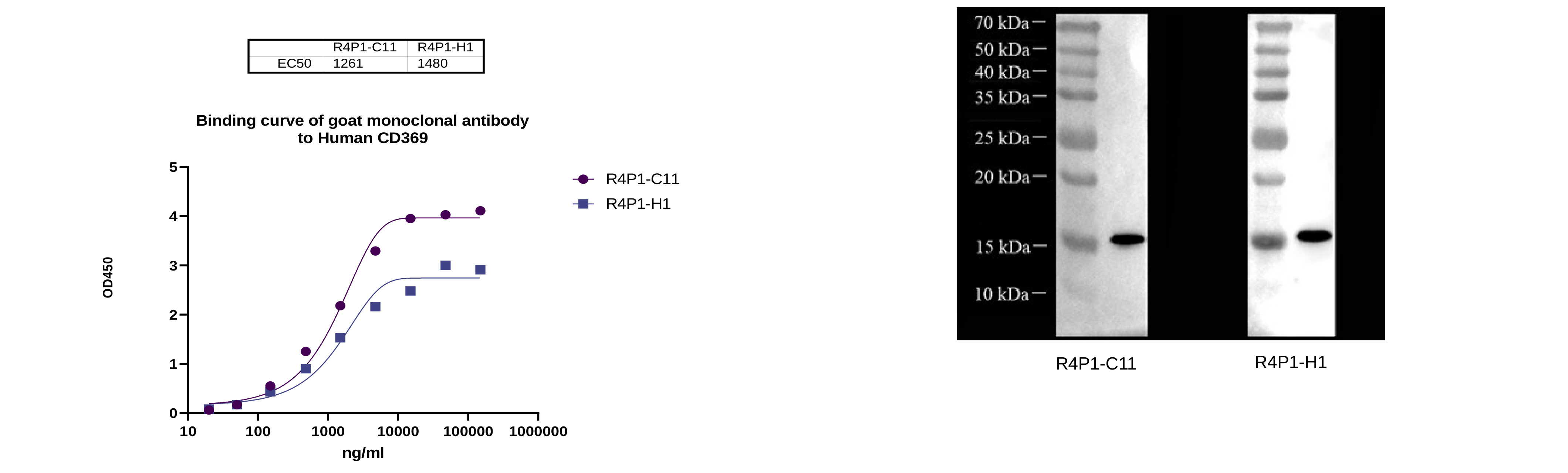
Figure 5. ELISA binding curve — Human CLEC7A (CD369). Two positive clones (R4P1-C11/H1), EC50: 1,261–1,480 ng/mL.
Naïve phage display libraries — regardless of host species — involve inherent trade-offs that should be understood upfront:
Affinity ceiling. Initial binders from naïve libraries typically have mid-to-high nanomolar affinities, lower than what can be achieved through optimized immunization campaigns. For applications requiring sub-nanomolar affinity (therapeutic development, high-sensitivity diagnostics), downstream affinity maturation is generally necessary.
Hit rate variability. Success rates are target-dependent. While library capacity and diversity set the theoretical upper bound, empirical hit rates vary with target characteristics (size, surface topology, stability in biopanning conditions). Not every target will yield positive hits from any single library.
Secondary reagent considerations. While anti-goat IgG secondary antibodies are widely available, some multiplexing platforms have more limited options for caprine-compatible detection reagents compared to mouse or rabbit. This should be evaluated during experimental design.
These are not unique to caprine libraries — they apply to all naïve phage display platforms. The decision to use a caprine library should be driven by specific application needs (species channel expansion, epitope complementarity, or conserved target challenges) rather than treated as a universal upgrade over conventional approaches.
The maturation of NGS-based repertoire analysis and high-capacity phage display library construction has made it practical to exploit the caprine immunoglobulin repertoire for recombinant antibody discovery at a scale that was not previously feasible. As the field moves toward more diverse antibody host species — driven by multiplex assay requirements, diagnostic pair development, and the ongoing challenge of conserved targets — goat and sheep are well-positioned as practical, complementary additions to the established mouse and rabbit toolkit.
The key question for any specific project is not "is caprine better?" but "does this target or application benefit from a different host species?" When the answer is yes, a well-characterized caprine naïve library provides a defined, reproducible path to recombinant antibody candidates.
1. Qin Y, et al. Exploring the sheep (Ovis aries) immunoglobulin repertoire by next generation sequencing. Mol Immunol. 2023;155:20–30. doi:10.1016/j.molimm.2023.01.006
2. Sun Y, et al. Immunoglobulin genes and diversity: what we have learned from domestic animals. J Anim Sci Biotechnol. 2012;3:18. doi:10.1186/2049-1891-3-18
3. Li Y, et al. Sheep monoclonal antibody fragments generated using a phage display system. J Immunol Methods. 2000;236(1–2):133–146. doi:10.1016/S0022-1759(99)00227-6
4. Foley RC, et al. Analysis of immunoglobulin light chain loci in sheep. Anim Genet. 1992;23(Suppl 1):31–32. doi:10.1111/j.1365-2052.1992.tb00229.x
5. Shaw L, et al. Intraspecific epitopic variation in a carbohydrate antigen exposed on the surface of Trichostrongylus colubriformis infective L3 larvae. PLoS Negl Trop Dis. 2009;3(9):e525. doi:10.1371/journal.pntd.0000525
Explore the Caprines-Native-scFv Library
Library specifications, QC data, validation results, and service details

Contact Us

+86-27-65523339

info@atagenix.com

Building C, R & D Building, No. 666, Shendun 4th Road, Donghu New Technology Development Zone, Wuhan