AtaGenix Laboratories

AtaGenix Laboratories
Release time: 2026-03-02 View volume: 773
Monthly Literature Collection — AtaGenix-supported research continues to reach prestigious journals. This collection highlights four recent publications in Developmental Cell, Plant Physiology and Biochemistry, Phytomedicine, and Cell Communication and Signaling — spanning Arabidopsis calcium signaling, Platycodon saponin biosynthesis, bladder cancer resistance mechanisms, and grass carp reovirus immune evasion.
Journal: Developmental Cell (IF: 8.7)
Affiliation: State Key Laboratory of Soil Pollution Control and Remediation Technologies, Zhejiang University
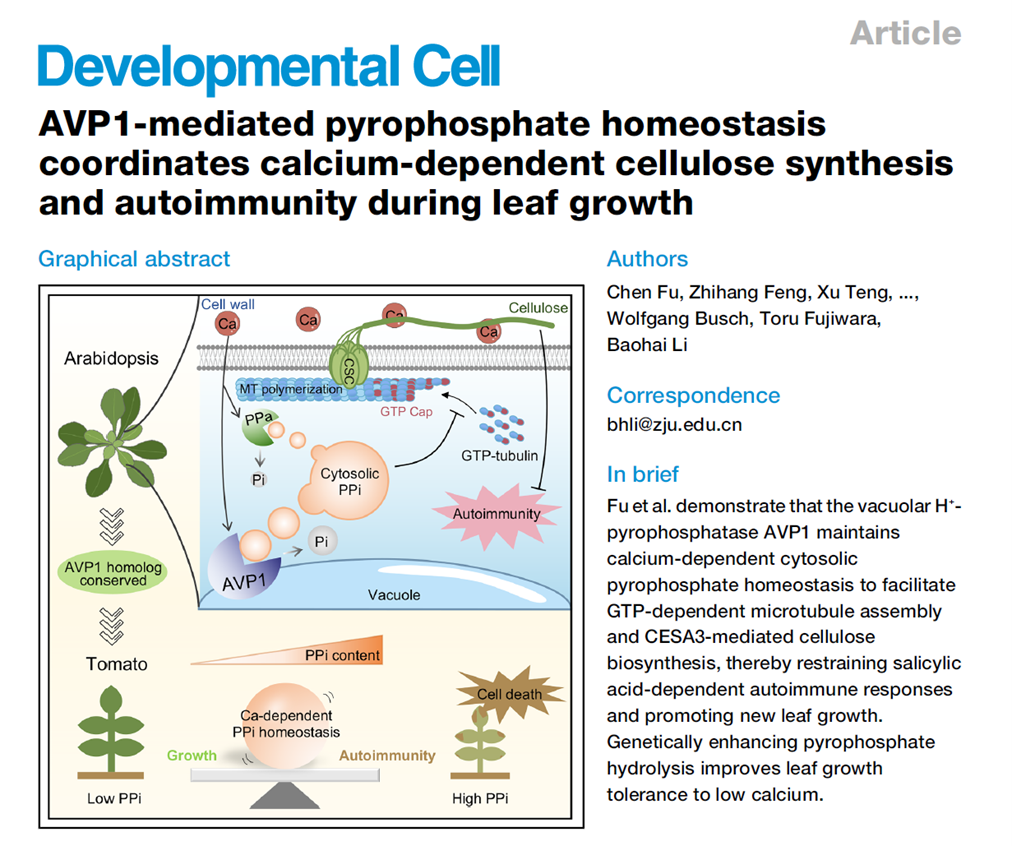
Using Arabidopsis as a model, this study found that vacuolar H+ pyrophosphatase (AVP1) coordinates calcium-dependent cellulose synthesis and autoimmunity by regulating cytoplasmic inorganic pyrophosphate (PPi) homeostasis. Calcium deficiency reduces AVP1 abundance, leading to PPi accumulation that disrupts microtubule assembly and cellulose synthesis, triggering autoimmune responses and inhibiting leaf growth. The mechanism is conserved in crops such as tomato.
AtaGenix’s Role: Custom-synthesized rabbit polyclonal antibodies targeting the conserved region (C+MPMIDQGEKDDKII) of Arabidopsis PPase1–PPase5. Used in Western blot to detect cytoplasmic soluble pyrophosphatase (sPPase) protein abundance, verifying sPPase suppression under low-calcium conditions and providing the key experimental tool for elucidating PPi accumulation mechanisms.
Journal: Plant Physiology and Biochemistry (IF: 5.7)
Affiliation: Anhui Dabie Mountain Institute of Medical Sciences
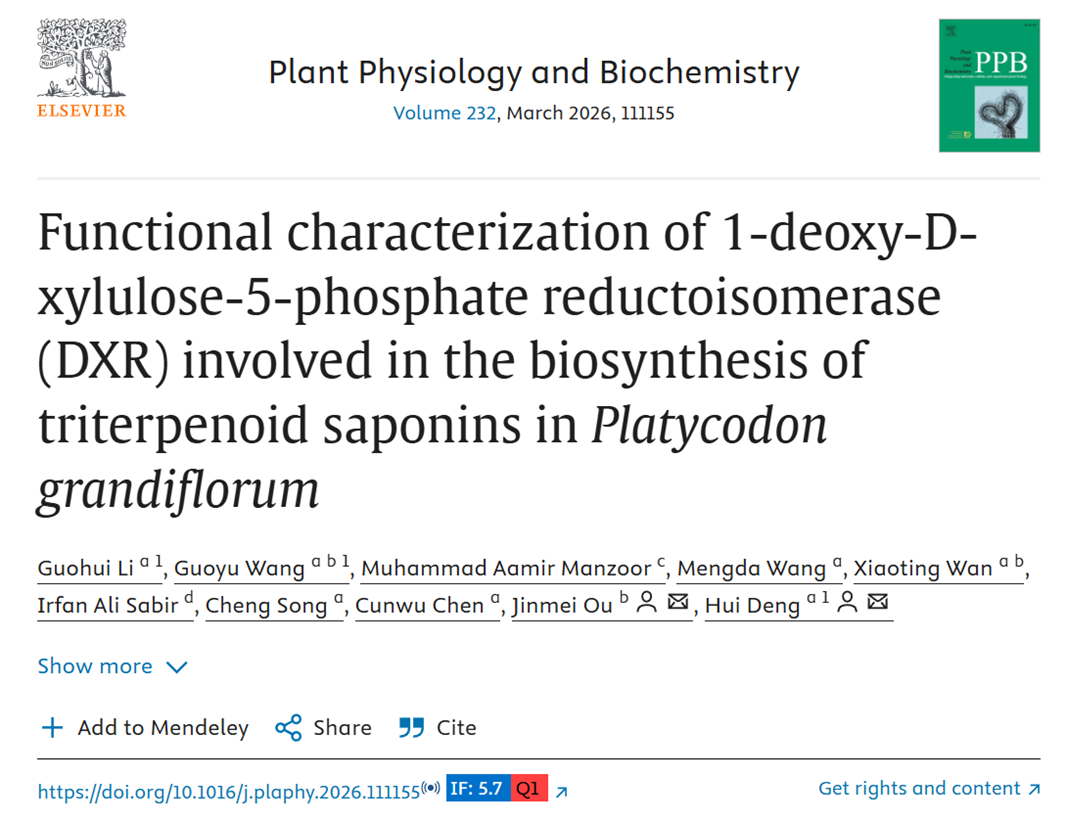
Three PgDXR genes were identified from the Platycodon genome. Only PgDXR1 showed in vitro enzymatic activity catalyzing DXP-to-MEP conversion. Its overexpression significantly increased oleanolic acid and total saponin content. Yeast one-hybrid and dual-luciferase assays confirmed that transcription factor MYB39 binds the PgDXR1 promoter and activates its expression, elucidating the key regulatory mechanism in triterpenoid saponin synthesis.
AtaGenix’s Role: Custom-synthesized rabbit polyclonal antibodies specific to PgDXR1. Used in Western blot to detect PgDXR1 protein expression in Platycodon roots of different growth years, confirming highest expression in two-year-old roots — consistent with triterpenoid saponin accumulation patterns and supporting the core conclusion that PgDXR1 drives saponin biosynthesis.
Journal: Phytomedicine (IF: 8.3)
Affiliation: Faculty of Life Science and Technology, Kunming University of Science and Technology
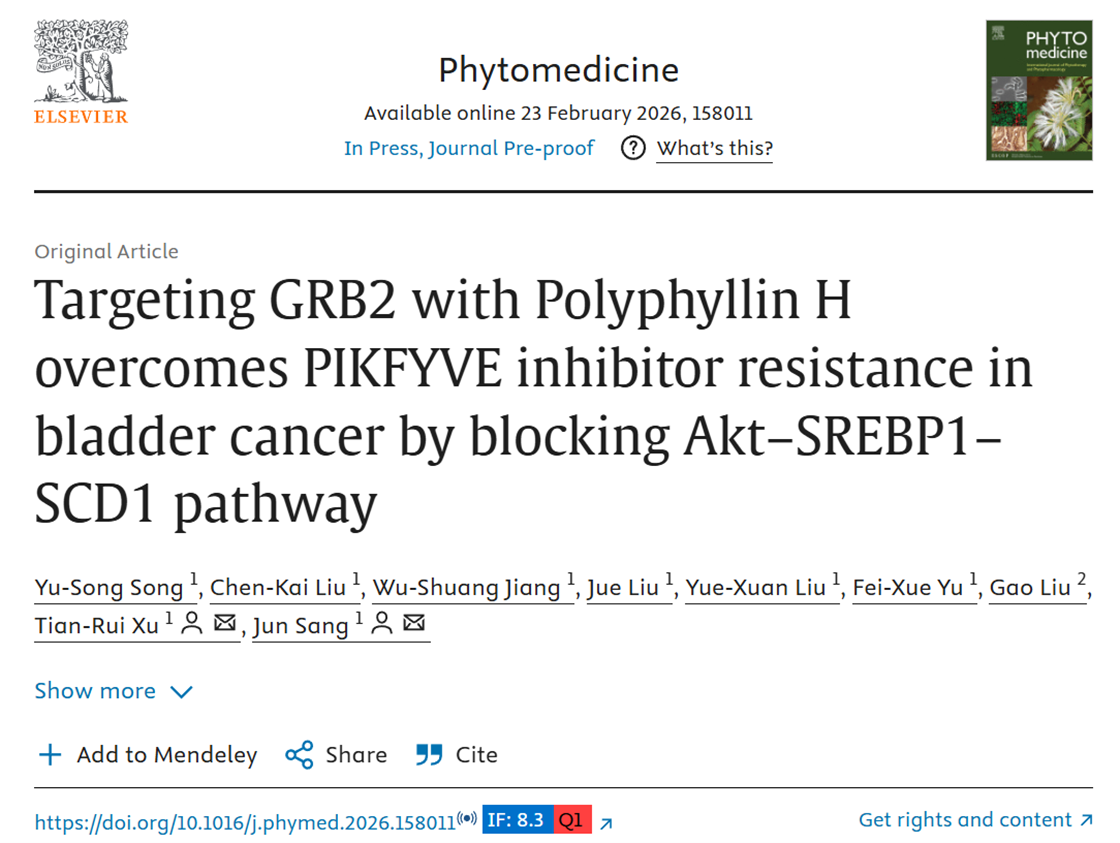
PIKFYVE inhibitors can suppress bladder cancer proliferation but activate a compensatory GRB2-dependent EGFR-Akt-SREBP1-SCD1 lipogenesis axis. Polyphyllin H (PPH) was identified as a novel GRB2 inhibitor that specifically binds c-SH3/SH2 domains (key residues Phe62, Ile65, Phe182), blocking lipid synthesis. The PPH + PIKFYVE inhibitor combination showed synergistic antitumor activity in vitro and in vivo with no obvious toxicity.
AtaGenix’s Role: Synthesized wild-type GRB2 protein for LC-MS binding mode analysis, SPR affinity measurement (KD = 8.11 μM), CETSA, and molecular dynamics simulation — providing direct experimental evidence that PPH is a specific GRB2 inhibitor.
Journal: Cell Communication and Signaling (IF: 8.9)
Affiliation: College of Fisheries, Huazhong Agricultural University
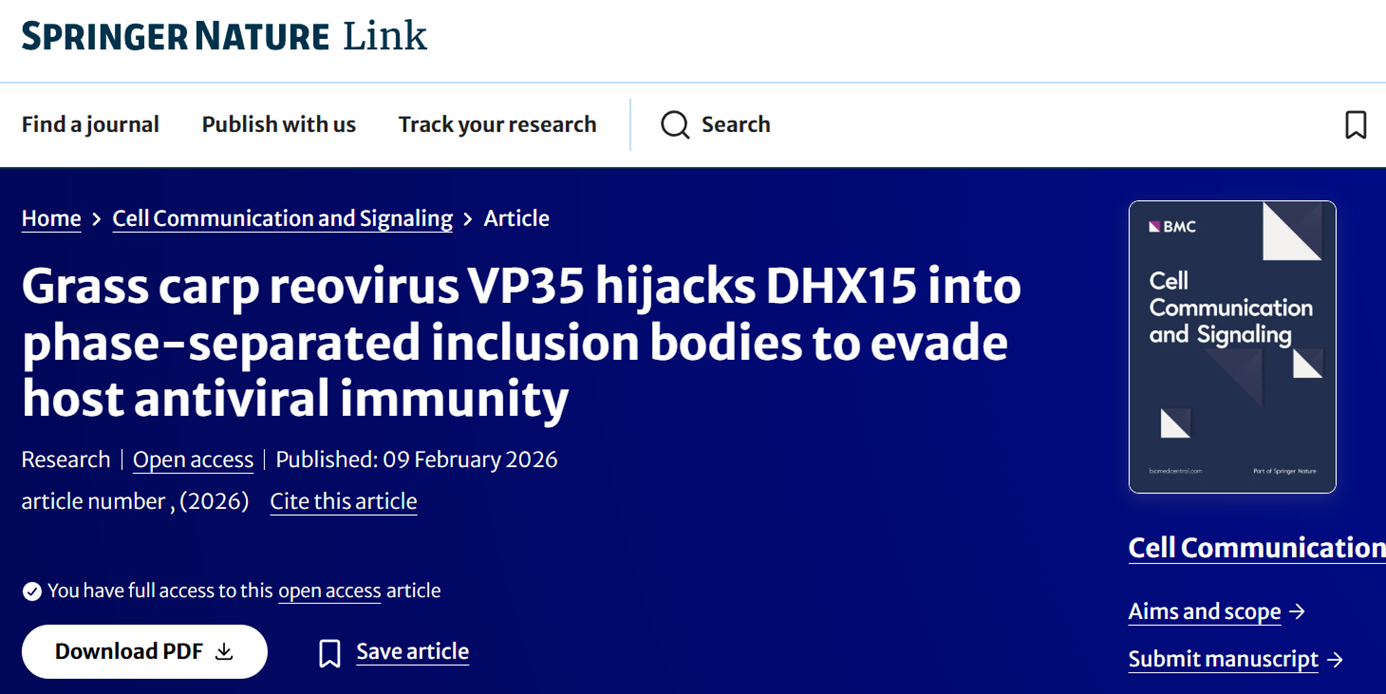
GCRV-II VP35 protein forms liquid viral inclusion bodies (VIBs) through liquid-liquid phase separation (LLPS). VP35 recruits host DEAH-box helicase 15 (DHX15) — which normally enhances IFN signaling by promoting TBK1 phosphorylation — into cytoplasmic VIBs and degrades it via the lysosomal pathway, blocking interferon pathway activation. This reveals a novel immune evasion strategy and provides new targets for anti-GCRV-II drug development.
AtaGenix’s Role: Prepared and purified rabbit polyclonal antibodies against GCRV-II VP35. Used in immunofluorescence (VP35 localization, VIB formation, VP35–DHX15 colocalization), Western blot (VP35 expression and DHX15 interaction), and viral infection dynamics experiments — providing direct evidence that VP35 forms VIBs through LLPS and hijacks DHX15.
Need custom antibodies or recombinant proteins to power your next publication? AtaGenix provides end-to-end support from antigen design to validated reagent delivery.
Talk to Technical SupportResponse within 24 hours

Contact Us

+86-27-65523339

info@atagenix.com

Building C, R & D Building, No. 666, Shendun 4th Road, Donghu New Technology Development Zone, Wuhan