AtaGenix Laboratories

AtaGenix Laboratories
Release time: 2025-11-28 View volume: 581
Monthly Literature Collection — Four recent AtaGenix-supported publications in Journal of Advanced Research (IF 13.0), npj Biofilms and Microbiomes (IF 9.2), ACS Sensors (IF 9.1), and International Journal of Biological Macromolecules (IF 8.5) — spanning triple-negative breast cancer olaparib resistance, engineered Mycoplasma for biofilm degradation, low-cost Meta-SPR biosensing, and rice blast fungus virulence suppression.
Journal: Journal of Advanced Research (IF: 13.0)
Affiliation: State Key Laboratory of Oncology in South China

The deubiquitinase ZUP1 is highly expressed in olaparib-resistant TNBC patients and serves as an independent poor-prognosis marker. ZUP1 stabilizes PARP1 by removing polyubiquitin chains at K425, promoting DNA damage repair (HR/NHEJ) while suppressing cGAS-STING pathway activation and CD8+ T-cell infiltration. Procyanidin C1 was identified as a ZUP1 inhibitor that synergistically inhibits resistant TNBC growth when combined with olaparib.
AtaGenix’s Role: Purified recombinant ZUP1231–578 protein for BLI binding validation of candidate compounds (procyanidin C1) and in vitro deubiquitination activity assays — confirming specific ZUP1 inhibition and providing the foundation for target validation and combination therapy development.
Journal: npj Biofilms and Microbiomes (IF: 9.2)
Affiliation: Huazhong University of Science and Technology

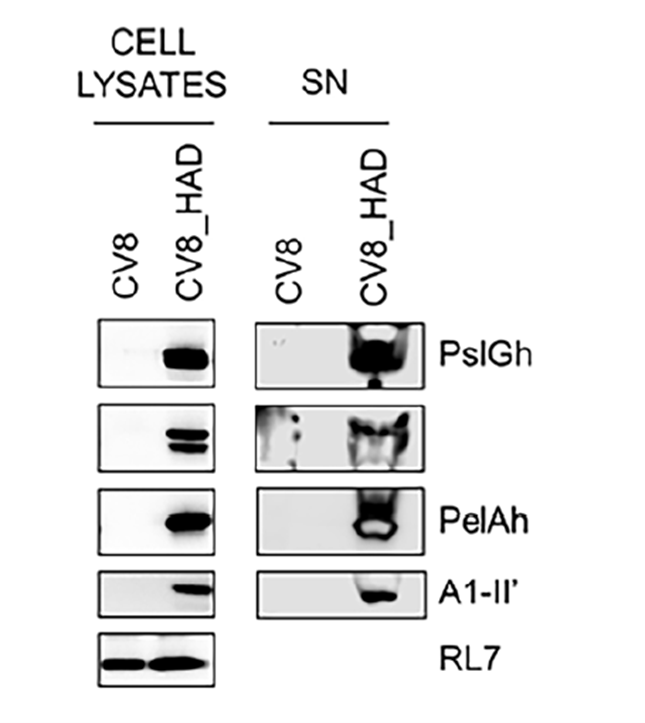
An attenuated Mycoplasma pneumoniae strain (CV8_HAD) was engineered to secrete four biofilm-degrading enzymes, effectively degrading both single- and dual-species S. aureus/P. aeruginosa biofilms. In mouse subcutaneous biofilm models and Galleria mellonella infection models, CV8_HAD demonstrated therapeutic efficacy and significantly improved survival rates.
AtaGenix’s Role: Custom-produced polyclonal antibodies used in Western blot to detect expression and secretion of biofilm-degrading enzymes from CV8_HAD, validating successful strain construction and confirming functional enzyme production.
Journal: ACS Sensors (IF: 9.1)
Affiliation: Huazhong University of Science and Technology

A detection platform integrating metasurface-enhanced SPR with industrial machine vision was developed at <$2,500 total cost, enabling real-time biomolecular interaction monitoring. The platform was validated through AFP antibody screening and EDA variant affinity analysis, identifying high-affinity binders and revealing the critical role of A259E in EDA–EDAR binding.
AtaGenix’s Role: Performed orthogonal validation of AFP antibody–antigen interactions using OpenSPR instrumentation. Results showed excellent agreement with the new Meta-SPR platform, providing key evidence for system accuracy and reliability.

Journal: International Journal of Biological Macromolecules (IF: 8.5)
Affiliation: Huazhong University of Science and Technology

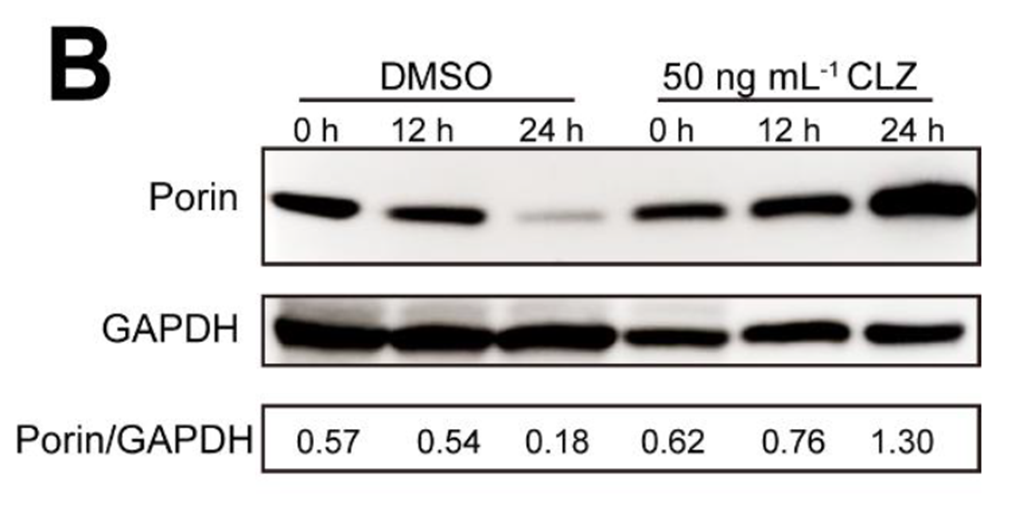
Clotrimazole (CLZ) targets the key ergosterol biosynthesis enzymes MoCyp51A and MoCyp51B in Magnaporthe oryzae, disrupting membrane integrity while inducing abnormal cell wall thickening, mitochondrial deformities, impaired mitophagy, and ROS accumulation. CLZ showed extremely low toxicity to insects and rice plants and effectively controlled rice blast in greenhouse trials.
AtaGenix’s Role: Custom-produced a specific anti-Porin antibody used in Western blot to monitor Porin protein level changes in M. oryzae, serving as a key tool to evaluate impaired mitophagy following CLZ treatment and confirming CLZ’s disruptive effect on mitochondrial function.
To date, more than 400 publications have cited AtaGenix’s one-stop protein and antibody development services. AtaGenix will continue to support scientific research and drive breakthroughs across diverse life science fields.
Need custom antibodies or recombinant proteins to power your next publication? AtaGenix provides end-to-end support from antigen design to validated reagent delivery.
Talk to Technical SupportResponse within 24 hours

Contact Us

+86-27-65523339

info@atagenix.com

Building C, R & D Building, No. 666, Shendun 4th Road, Donghu New Technology Development Zone, Wuhan