01
Calbindin‑D28k deficiency mediates tau‑driven hippocampal hyperexcitement and cognitive impairment
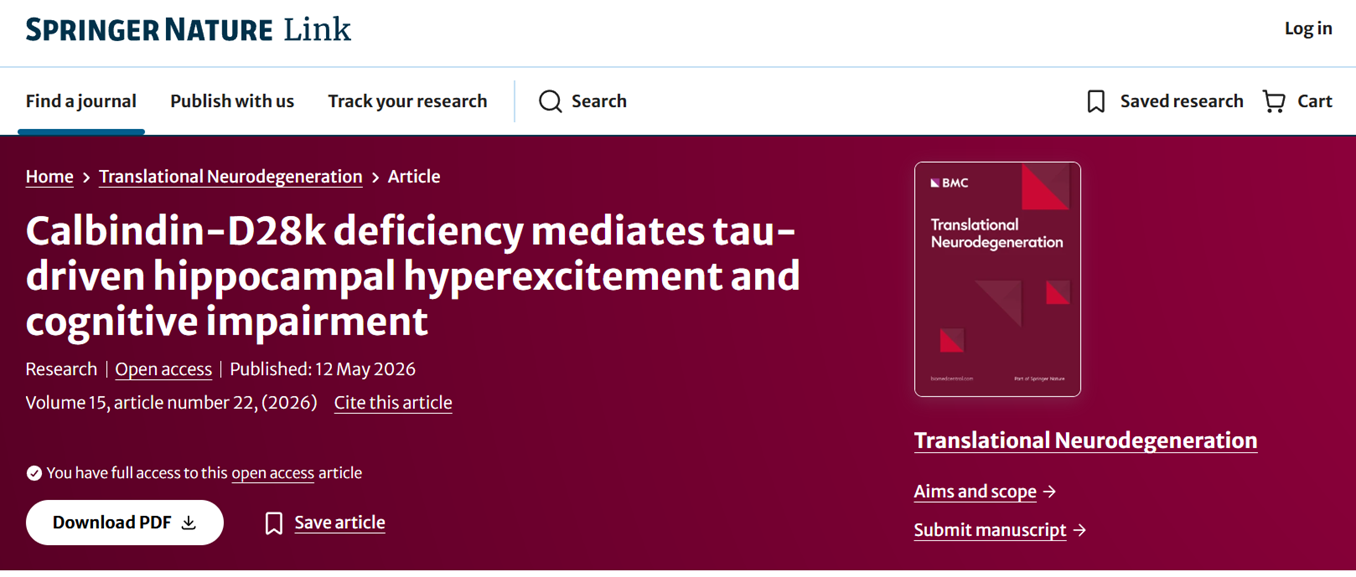
The high co-occurrence of temporal lobe epilepsy (TLE) in patients with Alzheimer's disease (AD) has long lacked a clear molecular explanation. This study investigated how aberrant tau accumulation drives neuronal hyperexcitability and ultimately leads to cognitive decline, focusing on hippocampal tau pathology as the entry point. Using an inducible tau transgenic mouse model (Tg hTau368) and a multi-modal toolkit — including calcium imaging, patch-clamp electrophysiology, optogenetic stimulation, and ¹⁸F-FDG PET/CT — the authors found that pathological tau accumulation in excitatory neurons of the CA1 region and dentate gyrus markedly suppressed expression of the calcium-binding protein Calbindin-D28k (CB). This loss disrupted intracellular calcium homeostasis, heightened neuronal excitability, reduced synaptic protein levels, and increased seizure susceptibility. Crucially, AAV-mediated overexpression of CB in these regions effectively reversed tau-induced hyperexcitability and cognitive deficits. Analysis of public AD datasets further confirmed a significant inverse correlation between CB expression and both cognitive function and disease stage — establishing CB deficiency as a key mechanistic link between tau pathology and cognitive decline, and identifying it as a promising new therapeutic target.
AtaGenix co-developed with the research team a sequence-specific monoclonal antibody (Tau368) targeting the N-terminal truncated tau fragment (Tau 1–368), validated for use in immunofluorescence staining and Western blot assays. The antibody enabled precise localization of tau aggregation to specific neuronal subpopulations — CA1 and dentate gyrus excitatory neurons — and allowed researchers to track the dynamic progression and regression of tau pathology across Dox treatment and withdrawal.