AtaGenix Laboratories

Home - About Us - Updates Center - News

AtaGenix September 2026 Publication Roundup: Ten Studies Across Oncology, Immunology and Pathogen Research

Release time: 2026-10-16   View volume: 14

Several studies supported by AtaGenix were published in September. This month's papers appeared in international journals including Cell Death & Disease, Cell Communication and Signaling and Materials Today Bio, covering triple-negative breast cancer, glioblastoma, plant photosynthesis, pollen allergy, systemic lupus erythematosus, sarbecoviruses, grass carp reovirus, Edwardsiella, tick-borne encephalitis virus and age-related macular degeneration — spanning oncology, immunology, pathogenic microbiology and plant biology. Across these projects, AtaGenix handled technical work from experimental design through data delivery, supporting each research group at every stage. A selection of this month's results is presented below.
01
Low-dose taxanes induce γδ-T cell reprogramming and ANXA6/PPP2R1A release to synergistically treat triple-negative breast cancer

JournalCell Death & Disease
Impact FactorIF 12.2
AffiliationThe First Affiliated Hospital of Sun Yat-sen University
Triple-negative breast cancer (TNBC) lacks well-defined molecular targets, and taxane-based chemotherapy remains the mainstay of treatment, limited by dose-dependent toxicity and acquired resistance. γδ-T cells kill tumor cells directly without MHC restriction, and their infiltration in TNBC is associated with better prognosis, but whether they act synergistically with taxanes has been unclear. Using TNBC cell lines and their paclitaxel-resistant sublines, patient-derived organoids and mouse xenograft models, together with transcriptomic and proteomic profiling, gene knockdown and in vivo treatment experiments, the authors found that low-dose paclitaxel and docetaxel suppressed tumor cell proliferation without harming γδ-T cells; instead, the drugs promoted their expansion and enhanced their effector function, and the combination showed synergistic antitumor activity both in vitro and in vivo. Mechanistically, taxane treatment induced γδ-T cells to secrete ANXA6 and PPP2R1A. Both proteins are highly expressed in breast cancer, correlate with better survival and are enriched in cell death-related pathways; knocking down either gene reduced the killing capacity of the conditioned medium, adding recombinant protein restored it, and both proteins induced apoptosis in TNBC cells directly. The synergy held in resistant cell lines, in organoids from chemotherapy-refractory patients and in resistant xenografts, and it eliminated cancer stem cell-like populations. The authors conclude that low-dose taxanes reprogram γδ-T cells to couple chemotherapy with immune killing, offering a route to overcoming resistance in TNBC while reducing chemotherapy toxicity.
AtaGenix supplied recombinant ANXA6 (rANXA6) and recombinant PPP2R1A (rPPP2R1A) for the functional validation experiments. The two proteins served three purposes: first, direct treatment of TNBC and resistant TNBC cells (rANXA6 0–10 μg/mL, rPPP2R1A 0–20 μg/mL, 48 hours), with luciferase-based killing assays and Annexin V/PI staining used to assess their independent antitumor and pro-apoptotic effects; second, use in add-back experiments, where the recombinant proteins were added to conditioned medium from ANXA6- or PPP2R1A-knockdown γδ-T cells to test whether killing capacity could be restored; and third, treatment of MDA-MB-231 cells followed by RNA sequencing to identify the downstream pathways involved.

02
Amino-acids-mTORC1-driven DDA1 phosphorylation promotes DNA repair and glioblastoma progression
JournalCell Communication and Signaling
Impact FactorIF 11.6
AffiliationState Key Laboratory of Respiratory Health and Multimorbidity
Glioblastoma (GBM) is the most common malignant brain tumor in adults, and excessive mTORC1 activation is one of its hallmarks, yet how mTORC1 relays nutrient signals to the DNA repair machinery in the nucleus has remained unclear. DDA1, a regulatory subunit of the CRL4^CSA ubiquitin ligase complex, participates in transcription-coupled nucleotide excision repair and is upregulated in several cancers, but its mechanism is undefined. Working with glioma cell lines and orthotopic xenograft models and combining affinity purification–mass spectrometry, phosphoproteomics, transcriptomics and gene editing, the authors found that DDA1 binds the mTORC1 core component Raptor directly at the lysosomal surface, although it does not act upstream of mTORC1. Amino acid stimulation induced mTORC1-dependent phosphorylation of DDA1 at serine 33, a modification controlled by both RagA and Rheb and highly conserved across vertebrates. Once phosphorylated, DDA1 moved from the cytoplasm into the nucleus, bound the CRL4^CSA complex more strongly and promoted nucleotide excision repair after UV damage, while a phospho-deficient mutant failed to restore clonogenic survival; transcriptomic analysis also suggested the pathway regulates a set of metabolic genes. In vivo, DDA1 knockout suppressed tumor growth, increased DNA damage and blunted the tumor response to nutrient supplementation, and clinical database analysis linked high DDA1 expression to poor prognosis. The authors propose that the mTORC1–DDA1^S33–DNA repair axis connects nutrient sensing to genome maintenance and may be a therapeutic target in glioma.
AtaGenix produced the custom phospho-specific antibody against DDA1 Ser33 used in this study. The antibody runs through the paper's mechanistic work: it was used to show that amino acid stimulation increases DDA1 Ser33 phosphorylation while Torin1 abolishes it, to demonstrate the marked reduction of this phosphorylation in RagA- and Rheb-knockout cells, to detect nuclear enrichment of phosphorylated DDA1 in nuclear–cytoplasmic fractionation samples, to confirm that the modification occurs across multiple glioma cell lines, and to verify pathway activation in orthotopic xenograft tissue.
03
OsCPK12-OsATPD1 Module Regulates Photosynthetic Acclimation to Light Stress in Rice
JournalCell Communication and Signaling
Impact FactorIF 11.6
AffiliationNorthern Center, China National Rice Research Institute
Coordination between the light and dark reactions of photosynthesis underpins both efficiency and photoprotection, but how plants control it is not well understood. Calcium-dependent protein kinases (CPKs) are broadly involved in stress signaling, and the authors had previously observed that the rice mutant oscpk12 is sensitive to high light, suggesting a role in light acclimation. Using wild-type japonica rice, the oscpk12 mutant and OsAtpD1 transgenic lines, together with protein interaction assays, in vitro kinase reactions, mass spectrometry, chloroplast isolation and chlorophyll fluorescence measurements, the study found that mutant plants senesced early under high light, with reduced chlorophyll content, net photosynthetic rate and maximum photochemical efficiency of photosystem II, and with elevated reactive oxygen species and malondialdehyde. Mechanistically, OsCPK12 interacts with OsAtpD1, the δ subunit of chloroplast ATP synthase, and phosphorylates a serine residue in its transit peptide; when this site was mutated to a non-phosphorylatable form, OsAtpD1 was retained in the cytoplasm, whereas a phosphomimetic form entered the chloroplast normally. Accordingly, ATP synthase activity, electron transport rate and the transmembrane proton gradient were all reduced in the mutant, in lines overexpressing the non-phosphorylatable form and in OsAtpD1 knockdown lines, while OsCPK12 overexpression lines exceeded wild type, and overexpression of the phosphomimetic form rescued the early senescence phenotype. The authors conclude that light-induced OsCPK12 phosphorylates OsAtpD1 to promote its import into the chloroplast, sustaining ATP synthase activity and proton gradient homeostasis and thereby enabling photosynthetic acclimation and photoprotection under light stress.
AtaGenix carried out two antibody-related custom synthesis tasks for this study. The first was to synthesize the phosphopeptide corresponding to OsAtpD1 Ser8 and its non-phosphorylated counterpart, conjugate them to keyhole limpet hemocyanin and immunize rabbits to generate polyclonal antiserum, which the authors then purified by affinity chromatography to obtain the anti-pSer8 antibody. The second was to synthesize full-length recombinant OsAtpD1 protein as the immunogen for the anti-OsAtpD1 antibody. Both antibodies feature in the paper's key evidence: the anti-pSer8 antibody was first validated for specificity by peptide dot blot, then used in in vitro kinase reactions to confirm phosphorylation of Ser8 by OsCPK12 and the loss of signal after λ phosphatase treatment, and subsequently in protoplasts to show that endogenous Ser8 phosphorylation occurs in ZH8015 but not in oscpk12-cr. The anti-OsAtpD1 antibody was used to measure OsAtpD1 abundance and its distribution between total protein and chloroplast fractions.
04
Engineering Tolerogenic mRNA-LNPs for Allergen-Specific Immune Reprogramming in Pollen Allergy
JournalMaterials Today Bio
Impact FactorIF 11
AffiliationSchool of Chemical Engineering, Dalian University of Technology
Pollen allergy affects roughly a third of the world's population. Existing allergen immunotherapy gives inconsistent results, can trigger IgE-mediated reactions and rarely establishes lasting tolerance. mRNA vaccines offer programmable antigens and a lower risk of IgE cross-linking, but the lipid nanoparticles used to deliver them are themselves adjuvant-active and cause non-specific inflammation that works against tolerance. This study modified both the antigen sequence and the delivery system: a non-secreted mRNA encoding the major mugwort allergen, with the signal peptide removed and the invariant chain fused, was designed so that the antigen is presented intracellularly through the MHC II pathway, while screening of PEG lipid chain length and the addition of mannose modification produced a low-inflammation formulation targeted to antigen-presenting cells. After subcutaneous administration the formulation was expressed mainly in the liver, where it created a local tolerogenic environment marked by elevated regulatory cytokines; dendritic cells adopted an MHC II-high, costimulatory molecule-low tolerogenic phenotype, and allergen-specific regulatory T cells expanded in the spleen. In both therapeutic and prophylactic mouse models of mugwort pollen allergy, the vaccine reduced allergic symptoms and lung inflammation, lowered specific IgE and corrected IgG subclass ratios. The authors present the platform as a modular strategy for inducing allergen-specific tolerance, while noting that the durability of that tolerance and the underlying causal mechanism still require further work.
AtaGenix supplied recombinant Art v 1, the major mugwort pollen allergen, with an N-terminal His tag. The protein served two purposes. First, it was the immunogen for the protein control group, administered in parallel with the mRNA vaccine, allowing conventional recombinant protein immunization to be compared with mRNA-LNP in terms of regulatory T cell induction and liver tolerance-related gene expression; in the prophylactic model it was also formulated with AlOOH nanorods (rAr-AlOOH) as a conventional adjuvanted vaccine control. Second, it was used as the in vitro restimulation antigen, applied at 2 μg/mL to splenocytes and lymph node cells to measure allergen-specific T cell responses, including the Treg markers CD25, FoxP3, CTLA-4 and Helios and intracellular cytokines. In cell-based experiments it additionally served as a free protein control for assessing effects on MHC II, CD80 and CD86 on LSECs and dendritic cells.
05
A proinflammatory FOLR2-positive macrophage subtype promotes cutaneous and renal damage in systemic lupus erythematosus
JournalJID
Impact FactorIF 7
AffiliationDepartment of Dermatology, The Second Xiangya Hospital, Central South University
Systemic lupus erythematosus (SLE) affects multiple organs. Adaptive immune abnormalities have been studied extensively, but the contribution of innate subsets such as macrophages to tissue damage remains unclear. Folate receptor 2 (FOLR2) marks proinflammatory macrophages in other inflammatory diseases, and urinary FOLR2 correlates with lupus nephritis and disease activity, yet its function has not been defined. Integrating public single-cell and transcriptomic datasets, clinical skin lesion and kidney biopsy specimens, lupus mouse models and in vitro macrophage experiments, the study found that total dermal macrophage numbers in SLE lesions were comparable to controls, but the FOLR2-positive subset was markedly expanded and became dominant — a pattern absent in discoid lupus erythematosus. Expression was similarly elevated in lupus nephritis kidney tissue, and the density of these cells in skin lesions correlated with disease activity scores. Compared with cells from healthy donors, SLE-derived FOLR2-positive macrophages showed a proinflammatory phenotype with multiple inflammatory pathways activated; after immune complex stimulation they secreted more proinflammatory cytokines, showed reduced phagocytic capacity and upregulated antigen presentation and costimulatory molecules. The authors then built a folate-targeted nanocarrier that selectively depleted and inactivated this subset, lowering autoantibody levels in mice, reducing skin and kidney pathology, improving the urinary albumin-to-creatinine ratio, shifting the Th1/Th17 ratio downward and increasing regulatory T cells, with an acceptable preliminary safety profile. The authors conclude that FOLR2-positive macrophages are a key pathogenic subset driving skin and kidney damage in SLE and that targeted depletion offers a precise alternative to broad immunosuppression.
AtaGenix supplied the recombinant RPLP0 protein used to assemble immune complexes in vitro. Anti-RPLP0 antibodies purified from patient serum were incubated with the recombinant protein at equal amounts of 3 μg/μl for 60 minutes at 37 °C to form RPLP0 immune complexes (IC), and human FOLR2-positive macrophages were then stimulated for 24 hours with PBS, RPLP0 protein alone, antibody alone or the IC. The protein reconstructed the immune complex environment of lupus skin lesions in vitro while also serving as the antigen-only control, separating the effect of the immune complex from that of antigen or antibody alone. This set of experiments built around recombinant RPLP0 is the only functional validation of the phenotype in the paper and provides the mechanistic basis for the targeted depletion strategy that follows.
06
Pangolin-derived sarbecoviruses show attenuated pathogenicity and transmissibility than SARS-CoV-2 in human ACE2 transgenic hamsters
JournalmBio
Impact FactorIF 5.4
AffiliationThe First Affiliated Hospital of Guangzhou Medical University
Several sarbecoviruses closely related to SARS-CoV-2 have been detected in Malayan pangolins, but their pathogenicity and cross-species transmission risk had not been systematically assessed. This study compared two pangolin-derived coronaviruses, MpCoV-GD and MpCoV-GX, side by side with SARS-CoV-2 in human cell lines, organoids and hACE2 transgenic hamsters. Both viruses replicated efficiently in human cells and organoids, though less so than SARS-CoV-2, and their spike proteins mediated weaker membrane fusion. In hamsters, MpCoV-GD produced lung pathology similar to SARS-CoV-2, with extensive alveolar parenchymal damage, whereas MpCoV-GX caused mainly mild inflammatory infiltration and alveolar wall thickening; both viruses transmitted by direct contact and by aerosol, although infectivity was clearly reduced by the aerosol route. In the treatment and prevention assessment, remdesivir and molnupiravir inhibited both viruses, and sera from COVID-19 convalescents and from mice immunized with inactivated vaccine cross-neutralized both. The monoclonal antibody S309 showed broad neutralizing activity, while REGN10933 and REGN10987 were effective only against MpCoV-GD, owing to extensive amino acid substitutions in the receptor-binding domain epitopes of MpCoV-GX. The authors conclude that pangolin-derived sarbecoviruses are generally less pathogenic and less transmissible than SARS-CoV-2, and that existing drugs and immunity offer some cross-protection, while continued surveillance of wildlife viruses remains necessary.
AtaGenix supplied the anti-SARS-CoV-2 spike monoclonal antibody S309 used in the plaque reduction neutralization tests (PRNT). The antibody was tested alongside the two approved therapeutic monoclonals REGN10933 and REGN10987: each was incubated with 100 PFU of SARS-CoV-2 or MpCoV-GD/-GX before infection of VeroE6 cells, and PRNT50 values were calculated from plaque counts to assess how well existing antibodies cross-neutralize the pangolin-derived viruses. S309 neutralized both pangolin coronaviruses effectively, while the other two antibodies worked only against MpCoV-GD. Its role in the paper is to represent the broadly neutralizing class: S309 recognizes a relatively conserved spike epitope, in contrast to the REGN antibodies that target the hypervariable receptor-binding domain, and it is this contrast that allowed the authors to attribute the neutralization failure to epitope sequence differences rather than to inadequate antibody potency.
07
Grass carp reovirus activates fish Ppp1r3g to suppress innate immunity and exacerbate hemorrhage via the 14-3-3ζ/Itgb3 signaling axis
JournalPLOS Pathogens
Impact FactorIF 4.9
AffiliationInstitute of Hydrobiology, Chinese Academy of Sciences
Hemorrhagic disease caused by grass carp reovirus (GCRV) is highly lethal in grass carp and rare minnow, with extensive bleeding across multiple tissues, and reducing hemorrhage is central to improving survival. The protein phosphatase 1 regulatory subunit PPP1R3G has been studied mainly in glycogen synthesis and lipid metabolism, and its role in fish innate immunity was unknown. Using grass carp kidney CIK cells, stable K562 lines, HEK293T cells, ppp1r3g-knockout rare minnow and ppp1r3g chimeric grass carp, together with co-immunoprecipitation–mass spectrometry, truncation and site-directed mutagenesis, immunohistochemistry and immunofluorescence, the authors showed that poly(I:C) and GCRV stimulation upregulate ppp1r3g, while knockdown suppresses viral replication and raises type I interferon levels, indicating that Ppp1r3g negatively regulates the RLR pathway through interactions with Rig-I, Mda5 and Traf6. In vivo, fish lacking the gene were markedly more resistant to GCRV, showed reduced hemorrhage and upregulated immune-related genes. Mechanistically, Ppp1r3g binds the EL17 fragment of 14-3-3ζ via Ser36/Ser37 in its PP1c domain, and integrin β3 (Itgb3) binds the same fragment, so the two compete; Ppp1r3g also promotes proteasomal degradation of Itgb3 in a dose-dependent manner, preventing formation of the 14-3-3ζ–Itgb3 complex and suppressing platelet activation and the downstream coagulation cascade. The authors conclude that GCRV induces Ppp1r3g to suppress antiviral immunity and coagulation at the same time, worsening hemorrhage, and that this axis is a potential target for controlling the disease.
AtaGenix supplied a custom anti-14-3-3ζ antibody used in three assays: Western blot, immunohistochemistry and immunofluorescence. The antibody detected endogenous 14-3-3ζ protein levels and tissue distribution: immunohistochemistry showed a stronger 14-3-3ζ signal in ovarian tissue of ppp1r3g-knockout rare minnow than in wild type after GCRV infection, and immunofluorescence showed a similarly higher signal in intestinal tissue of ppp1r3g chimeric grass carp.
08
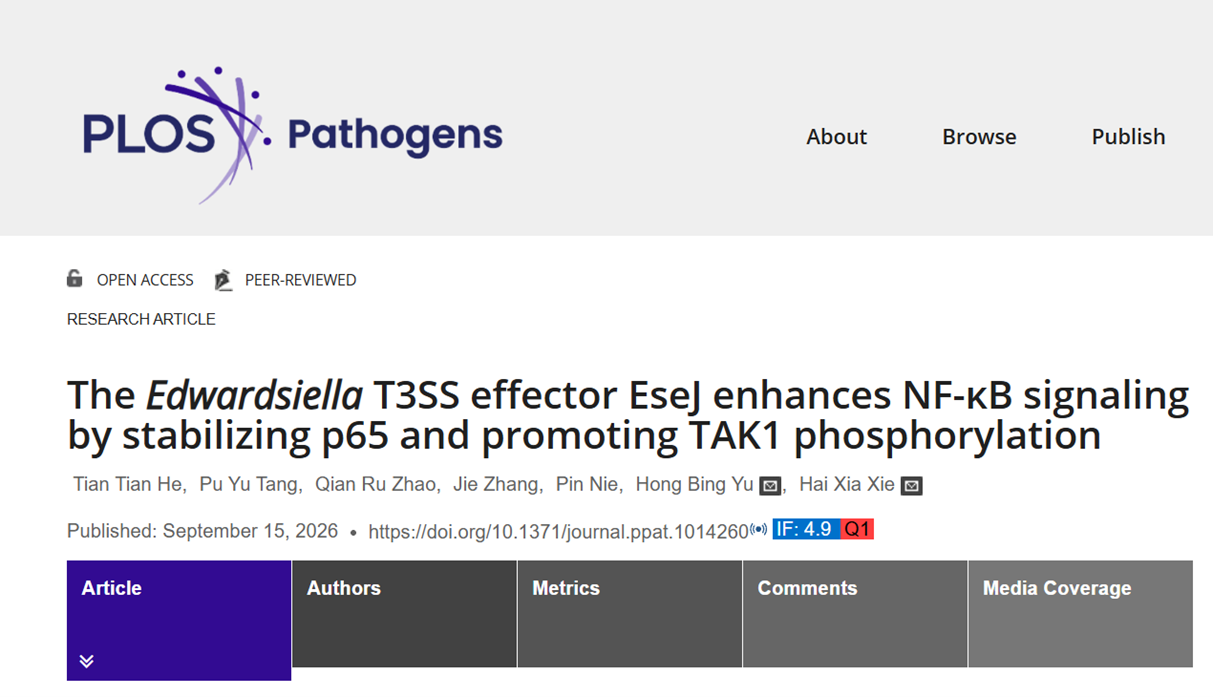
The Edwardsiella T3SS effector EseJ enhances NF-κB signaling by stabilizing p65 and promoting TAK1 phosphorylation
JournalPLOS Pathogens
Impact FactorIF 4.9
AffiliationInstitute of Hydrobiology
Edwardsiella piscicida is a Gram-negative pathogen that infects many commercially farmed fish and can also infect humans. Its type III secretion system (T3SS) injects effector proteins into host cells to interfere with immune signaling and is central to virulence, but which effectors drive the strong inflammatory response, and how, had not been established. Using the mouse macrophage line J774A.1, HEK293T cells, primary head kidney leukocytes from yellow catfish and zebrafish larvae, together with deletion strains, co-immunoprecipitation, ubiquitination analysis and domain truncation, the study showed that the T3SS effector EseJ activates the NF-κB pathway and promotes the transcription and secretion of IL-1β, IL-6 and other proinflammatory cytokines, with an eseJ deletion strain inducing markedly less. Mechanistically, EseJ acts on two ubiquitin-dependent steps through two independent domains: its N-terminal region (residues 1–242) binds the NF-κB subunit p65 and prevents K48-linked polyubiquitination and proteasomal degradation, maintaining higher levels of total and phosphorylated p65 and promoting nuclear translocation and transcriptional activity; its middle region (residues 243–532) binds both TAK1 and TRAF6, acting as a molecular scaffold that stabilizes the TRAF6–TAK1 complex, enhances TRAF6-mediated K27-linked ubiquitination of TAK1 and drives TAK1 phosphorylation and activation of the downstream IKK–IκB–NF-κB cascade, an effect lost when TAK1 is inhibited. Zebrafish infection experiments confirmed that EseJ is required for cytokine production in vivo. The authors conclude that EseJ amplifies NF-κB-dependent inflammation by targeting p65 and TAK1 simultaneously, and that because its homologs are conserved in other Gram-negative bacteria, the mechanism may be a general one.
AtaGenix supplied the rabbit anti-IL-1β monoclonal antibody, used at a 1:1000 dilution for Western blot. The antibody measured IL-1β protein in infected host cells, covering both the pro-IL-1β precursor and the cleaved mature form. In the infection experiments with primary head kidney leukocytes from yellow catfish, the authors used it to compare IL-1β levels after infection with ΔfimH versus ΔeseJΔfimH; total p65, pro-IL-1β and cleaved IL-1β were all clearly lower with the eseJ deletion strain.
09
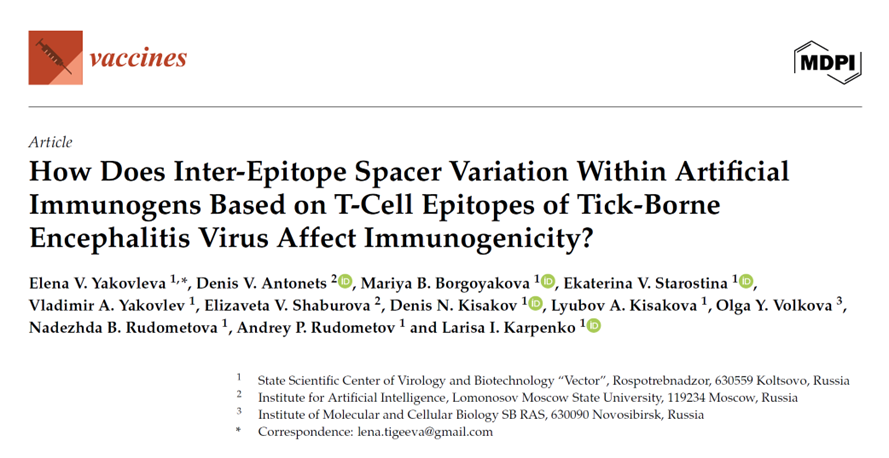
How Does Inter-Epitope Spacer Variation Within Artificial Immunogens Based on T-Cell Epitopes of Tick-Borne Encephalitis Virus Affect Immunogenicity?
JournalVaccines
Impact FactorIF 3.5
AffiliationState Research Center of Virology and Biotechnology, Russia
Tick-borne encephalitis virus (TBEV) causes an estimated 10,000 to 15,000 reported cases each year. Existing inactivated vaccines mainly induce humoral immunity, require multiple doses and offer limited duration of protection, which is generally attributed to the weak T cell response they elicit. Artificial multi-epitope immunogens are a plausible route to a T cell vaccine, but how the spacer sequences linking epitopes affect immunogenicity has largely been addressed by theoretical prediction, without systematic comparison within a single epitope set. The authors screened flavivirus T cell epitopes from the Immune Epitope Database, aligned them against the TBEV proteome and used epitope prediction tools to select 13 oligopeptides from the E, NS1, NS3 and NS5 proteins, assembling them into multi-epitope immunogens in three ways: with an algorithm-optimized alanine-containing spacer, with a flexible GPGPG spacer and with no spacer at all, each fused to ubiquitin at the N terminus and built into a corresponding DNA vaccine. Structural prediction showed little difference between the three designs, but protein expression analysis indicated that the GPGPG construct is processed quite differently and exists only as degradation products. After electroporation-based immunization of mice, the alanine-spacer and no-spacer groups both induced significant IFN-γ-secreting cell responses, while the GPGPG group responded weakly; none produced antibodies against the E protein, consistent with a design containing only T cell epitopes. The authors conclude that spacer choice substantially affects the immunogenicity of multi-epitope vaccines and that GPGPG is unsuitable in this system, while noting that the findings so far come from a single mouse strain.
AtaGenix supplied the 18 synthetic peptides used to stimulate splenocytes, all at ≥80% purity. The peptides correspond to the TBEV epitopes contained in the constructs and include 9-mer MHC class I-restricted peptides and longer MHC class II-restricted peptides, predicted by NetMHCpan-4.1 and NetMHCIIpan-4.0 on %Rank and then synthesized by AtaGenix. In the experiments the peptides were pooled at 20 μg/mL each and used to restimulate splenocytes from immunized mice in vitro, with IFN-γ-secreting cells counted by ELISpot. This is the only readout of immunogenicity in the paper: the differences between the three DNA vaccine groups — significant responses from AG1-ub and AG4-ub, a background-level response from AG2-ub — rest entirely on stimulation with this peptide pool. Because the peptides correspond strictly to the epitopes present in the constructs, the assay reports antigen-specific T cell responses rather than non-specific activation, which is what allows the authors to conclude that spacer choice affects immunogenicity. Covering only T cell epitopes, the peptide pool also complements the ELISA based on recombinant E protein, and together the two support the conclusion that the constructs are T cell-directed.
10
Expression, Purification and Antioxidant Activity of Recombinant Human Vascular Endothelial Growth Factor B167 in Escherichia coli
JournalProtein Expression and Purification
Impact FactorIF 1.8
AffiliationSchool of Life Sciences, Liaoning University
Age-related macular degeneration (AMD) is the leading cause of vision loss in older adults, oxidative stress is considered its core pathogenic mechanism, and effective prevention or treatment is still lacking. VEGFB is the member of the VEGF family with both antioxidant and neuroprotective activity, and its main functional isoform VEGFB167 accounts for more than 80% of transcripts, but low yields in prokaryotic expression have made large-scale preparation difficult. This study established a temperature-induced, IPTG-free expression system in E. coli BL21 using the pBV220 vector; the target protein accumulated efficiently as inclusion bodies and, after nickel affinity chromatography, refolding and gel filtration, yielded active protein of approximately 97% purity. In a hydrogen peroxide-induced oxidative injury model in retinal pigment epithelial cells, VEGFB167 reduced membrane damage and lipid peroxidation in a concentration-dependent manner, lowered reactive oxygen species, raised antioxidant enzyme activity and the expression of related genes, suppressed apoptosis and restored DNA replication and proliferation. The authors conclude that the workflow reliably produces biologically active VEGFB167 and supports its development as a candidate therapeutic for oxidative damage-related disease, while noting that the evidence comes only from in vitro cell experiments, that the upstream receptor and downstream signaling remain undefined and that in vivo efficacy has yet to be demonstrated.
AtaGenix constructed the VEGFB167 expression plasmid, covering gene synthesis, vector construction and plasmid sequencing. The authors designed a VEGFB167 coding sequence with a C-terminal His tag based on the CCDS database, codon-optimized it for E. coli and introduced BamHI and EcoRI sites at the 5' and 3' ends; AtaGenix performed the DNA synthesis and cloning, and the resulting plasmid was transformed into BL21 for expression. All subsequent work — temperature-induced expression, inclusion body purification, refolding and the cell-based functional assays — rests on this plasmid, with codon optimization determining the expression yield in the prokaryotic system and the His tag making the nickel column purification route feasible.

Thank you for your interest and support!

AtaGenix will continue to provide high-quality custom antibody, protein expression and other
one-stop technical services in support of scientific research.

Send an Enquiry / Request a Service Plan
Messages
captcha