AtaGenix Laboratories

AtaGenix Laboratories
Release time: 2026-04-30 View volume: 20
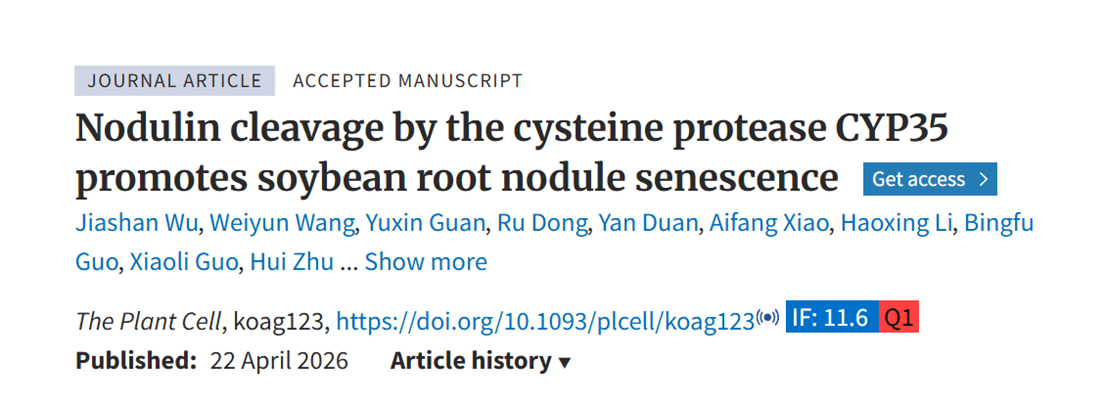
Root nodule senescence is a key determinant of symbiotic nitrogen fixation efficiency in leguminous plants. The cysteine protease CYP35 acts as a positive regulator of soybean root nodule senescence, but its substrates were previously unknown. This study revealed that CYP35 is a cathepsin L-like cysteine protease, with Cys149 as its critical catalytic residue. Using yeast two-hybrid screening and other experiments, researchers identified eight nodule-enriched nodulins (NEN1–8) as interaction substrates of CYP35. Multi-mutant nen plants exhibited accelerated nodule senescence and reduced nitrogenase activity, while overexpression of NEN2 or NEN5 delayed senescence and enhanced nitrogen fixation capacity.
In vitro and in vivo experiments confirmed that CYP35 cleaves and degrades NEN2, NEN5, NEN6, and NEN7 in a Cys149-dependent manner. Transcriptomic analysis showed that loss of NENs upregulates senescence-associated genes and downregulates genes involved in growth maintenance. The study establishes a direct molecular link between CYP35-mediated hydrolysis of NEN proteins and the initiation of root nodule senescence, providing a theoretical basis for regulating nodule lifespan and improving nitrogen fixation efficiency.
AtaGenix prepared rabbit polyclonal antibodies against soybean NEN2 protein for this study. These antibodies were used to detect NEN2 protein levels in vivo and validate the degradation of NEN2 by CYP35, serving as the core reagent supporting the key conclusion that “CYP35 cleaves NEN2 in vivo.”
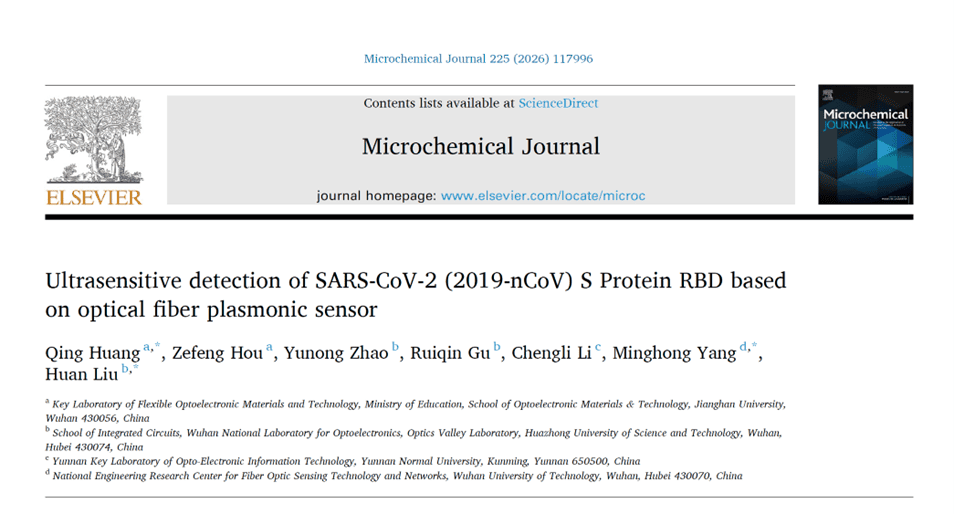
Early detection of SARS-CoV-2 still requires ultra-high sensitivity and rapid label-free detection technologies. Traditional fiber-optic SPR sensors suffer from insufficient sensitivity and difficulty in achieving fg/mL-level detection. This study developed a fiber-optic plasmonic SPR sensor enhanced by Au@AgPt core-shell nanospheres combined with a gold film for quantitative detection of the SARS-CoV-2 S protein RBD.
Experiments showed that the sensor leverages the localized surface plasmon resonance electric field enhancement effect of the nanomaterials to significantly amplify the optical signal. It exhibited excellent linearity in the range of 1 fg/mL to 100 pg/mL, with a detection limit as low as 1.74 fg/mL. The sensor offers rapid response and high specificity, effectively distinguishing the target protein from control proteins. It retained 87% of its sensitivity after 6 days of storage at -20°C, demonstrating strong practical potential.
AtaGenix provided anti-SARS-CoV-2 RBD neutralizing antibodies, recombinant SARS-CoV-2 S protein RBD antigen, recombinant MERS-CoV S protein RBD antigen, as well as eosinophil cationic protein (ECP) antigen and myeloperoxidase (MPO) antigen for this study. These proteins and antibodies were essential materials for constructing the immunosensing interface and enabling specific recognition. The antibodies were used to modify the fiber-optic sensing surface as recognition probes, the RBD antigens served as standard targets for performance calibration, and the control proteins were used to verify sensor specificity. They supported the three critical experiments of surface coupling modification, quantitative calibration, and specificity testing, ensuring the specificity, sensitivity, and reliability of the detection results.
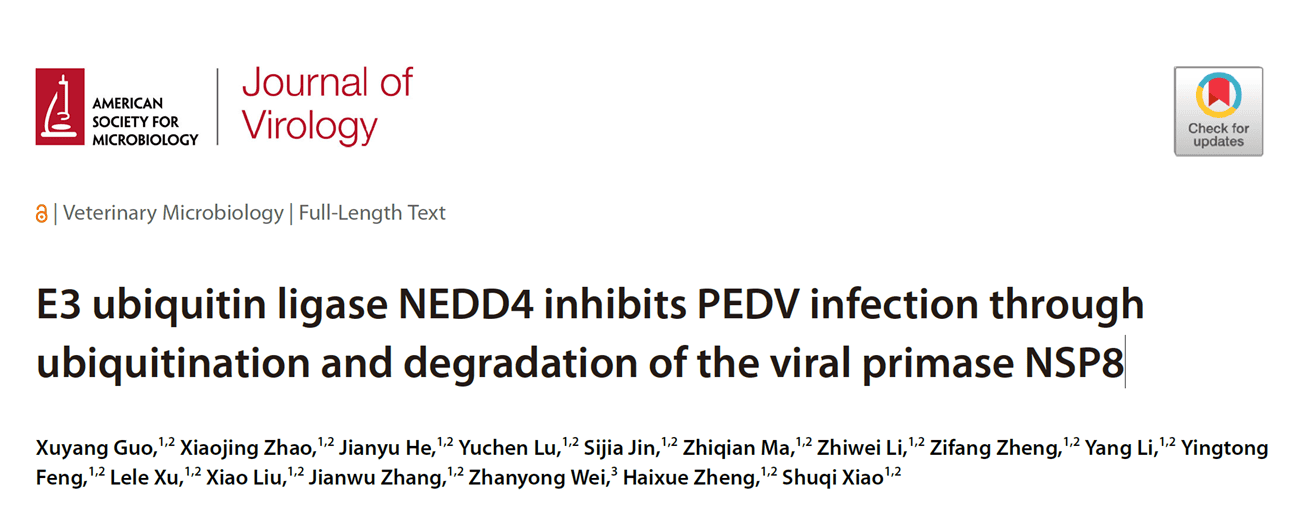
Porcine epidemic diarrhea virus (PEDV) is a highly lethal α-coronavirus that causes substantial economic losses to the global swine industry. The host antiviral mechanisms against PEDV remain incompletely understood. This study focused on the intestinal homeostasis regulator E3 ubiquitin ligase NEDD4 and investigated its role in PEDV infection.
Results showed that PEDV infection significantly upregulated NEDD4 expression both in vitro and in vivo. Overexpression of NEDD4 inhibited PEDV replication, while knockout promoted it. The C2 domain of NEDD4 was found to be crucial for its antiviral function. Mechanistically, NEDD4 recognizes the SPP motif of the viral primase NSP8 and mediates K63-linked ubiquitination at the K170 site, leading to degradation through both the ubiquitin-proteasome system and NDP52-dependent selective autophagy. Additionally, NEDD4 upregulated beclin-1 to enhance cellular autophagy, further strengthening its antiviral effect. This mechanism is conserved across multiple α-coronaviruses.
The study demonstrates that NEDD4 inhibits PEDV infection through dual pathways, providing a new target for the development of anti-PEDV drugs.
AtaGenix prepared rabbit polyclonal antibodies against PEDV NSP8 for this study. These antibodies served as a core tool for validating the endogenous interaction between NEDD4 and NSP8, as well as for detecting the expression and localization of viral NSP8 protein. They were used in key experiments including co-immunoprecipitation, Western blot, and immunofluorescence, supporting the central conclusion that "NEDD4 binds to and ubiquitinates NSP8 for degradation."
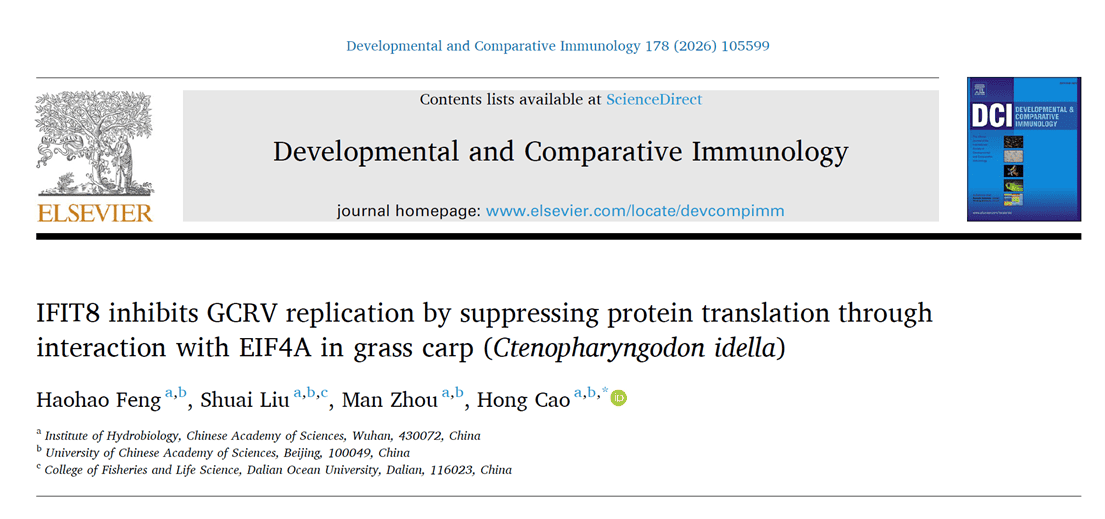
Grass carp reovirus (GCRV) causes severe hemorrhagic disease in grass carp, posing a major threat to aquaculture. Interferon-induced proteins (IFITs) are key effector molecules in the host's antiviral innate immune response. This study investigated the molecular mechanism by which grass carp IFIT8 (CiIFIT8) exerts anti-GCRV activity, using grass carp and the rare minnow as model systems.
Results showed that ciIFIT8 is widely expressed in various tissues of grass carp. Its expression is significantly upregulated by GCRV infection, IFN1, and Poly(I:C), confirming it as an interferon-stimulated gene. Overexpression of CiIFIT8 in cells markedly inhibited GCRV replication, reduced viral VP2/VP7 transcription levels and viral titers, and suppressed global cellular protein translation.
Mechanistically, CiIFIT8 directly binds to the eukaryotic translation initiation factor EIF4A via its TPR domain, thereby blocking EIF4A-mediated translation initiation. Treatment with the EIF4A inhibitor RocA also significantly suppressed GCRV replication, indicating that EIF4A is essential for viral replication. In summary, CiIFIT8 inhibits viral protein translation through interaction with EIF4A, thereby exerting its anti-GCRV function. This discovery provides new targets for understanding antiviral innate immunity in fish and for the prevention and control of grass carp hemorrhagic disease.
AtaGenix custom-produced anti-IFIT8 and anti-EIF4A1 polyclonal antibodies for this study. These antibodies were used in endogenous co-immunoprecipitation and Western blot experiments to directly verify the interaction between CiIFIT8 and CiEIF4A, serving as essential reagents for confirming their binding and elucidating the underlying molecular mechanism.
Thank you for your attention and support!
AtaGenix will continue to provide high-quality one-stop professional technical services, including custom antibody development and protein expression, to support more scientific breakthroughs.

Contact Us

+86-27-65523339

info@atagenix.com

Building C, R & D Building, No. 666, Shendun 4th Road, Donghu New Technology Development Zone, Wuhan